Welcome to the meandering musical insights of Aaron Joy (me!), formerly known as the Roman Midnight Music Blog. Here you'll find nearly 750 reviews of CDs & DVDs of rock & metal in all its variations, mainstream & indie, good & bad, U.S. & foreign. A new review every Monday.

Please share these reviews & feel free to copy them to your website or link to them. No downloads to be found here.

Are you a musician with an album?? Please e-mail me (aronmatyas @ hotmail.com) your album, EPK, etc. Or, hit me up for a physical address (I'm in Portland, Maine). If you don't have an EPK, I have a soft spot for personal handwritten letters from the local musician who just plays around town. I'm a bassist & do this blog partly to share music I love & partly to help the little guy, like myself, just looking for some attention. Promo companies are always welcomed to reach out.

You can support this blog by buying my books via amazon, or your local bookseller, or seeing my website www.aaronjoyauthor.weebly.com.
Showing posts with label / scandinavia & sweden. Show all posts

September 5, 2022

Mercyful Fate ~ Melissa (album review) ... King Diamond's black metal masterpiece!


Style: heavy metal, speed metal, black metal
Year: 1983
Label: Megaforce
Home: Denmark


Members: King Diamond ~ vocals
Hank Shermann, Michael Denner ~ guitars
Timi "Grabber" Hansen ~ bass
Kim Ruzz ~ drums


Perfection. That's really all I need to say about the debut album of Mercyful Fate. A near masterpiece of a black metal occult/Satanic romp from a young band, & it isn't even considered their crowning achievement. The tracks are creative, exciting, raw, fresh, & dynamic from the opening notes to the final screams. It sounds like nothing you've heard before, yet taps into Black Sabbath, Accept, Judas Priest, Iron Maiden & other such bands. To elaborate, Mercyful Fate may have a twin guitar attack like Accept & so many of their peers, but they've made it their own with some neo-classical flourishes & a balance between speed metal fierceness & ear-catching riffs. While the music is full of so many little riffs & pieces that work so intricately together they almost foreshadow the prog metal movement, but yet remain rooted in headbanging over guitar pyrotechnics masturbation. While over the music is the distinctive vocals of King Diamond. He jumps with unpredictable abandon between a growl, to shouts like you might hear in a Black Flag influenced punk band, to his recognizable falsetto wail. Its as dynamic as the music & the two pieces weave through each other & work together for an enthralling experience. At times it almost feels like King Diamond wasn't yet comfortable with his voice & was throwing everything into the mix seeing what worked & what didn't. The mix of music & voice toes the line of being too dynamically witty & proggy for its own good at moments, yet is so raw & full of energy that that the flaws I think can be overlooked. It really feels like these guys were trying to craft more than just speed metal songs, but really wanting to tap into the occult energy they were singing about. These songs have so many intricate parts working together that even upon multiple listens I felt like there was still more to discover. That's a compliment I rarely give. The music is theatrical, memorable, will haunt your ears long after, will inspire you if you're in a black metal band, & will make you long for the early days of metal. What more can you ask for?

August 2, 2021

Yngwie Malmsteen ~ Parabellum (album review) ... Getting off in public should be more pleasurable!

Style: instrumental, hard rock, prog metal
Year: 2021
Label: Music Theories Recordings
Home: n/a

Members: Yngwie Malmsteen ~ all instruments


Ten tracks of everything you expect from Yngwie: classically fused speed of light guitar runs. Its really hard to say much else about an Yngwie album. You know what you get when you get one & they are all in the same mold, even if the promo materials promise something different. You either love him, or hate him, or find him talented but lacking restraint. Speaking of hate, I'm sure his former vocalists hate him completely after the criticisms he's lodged at them after discovering his ego wasn't the biggest or only one in the room  they didn't kiss his ass, thus Yngwie has taken to being his own vocalist once again. I doubt anyone wants to sing with him, or if they do they know how it will end. Its too bad, as his vocals I found to be a weak spot of his last outing. Here he's trying to improve things with multiple backing tracks, reverb & studio gimmicks, but the fact is unavoidable that he has an adequate voice & limited range that doesn't add anything unique to the music. Its one step from a guide vocal by anonymous session backing vocalist, only made worse by the fact every song sounds alike. I want to take the lyrics from one song & put them on another just to see if they are as interchangeable as I feel they are. He needs a strong vocalist. Luckily, many of the tracks here are instrumentals. He should get some new kid, like a JSS, to sing who needs the career boost. While he's at it: get a band. Drum machines, keyboards & bass playing that is fast but not particularly interesting - as guitarists do not think like bassists, & this is why they are not necessarily interchangeable roles - doesn't give him the foundation that his flights of speed need. The backing instruments are purely sound effects, adding nothing to the experience. Its like he's noodling over demo tracks. Given outside his lead guitar the rest of the instruments sounded muddy or poorly mixed, the feeling of them being demos never left me even after repeated listens. He should take a page from Steve Vai, whose band is hot & stellar & are interacting with him as much as supporting him. Moving on, versus hanging around talking about the same thing without going anywhere ... which sorta summarizes the Yngwie style ... promo materials say Yngwie literally killed nineteen guitars during rehearsals & seventy-four in the making of the album. Quite literally killed them due to excessive friction from his fingerwork. That's cool, & an expensive investment, but its not like you're hearing any of that on the album. So, its irrelevant, but that's essentially the selling point of the album cause Yngwie isn't really offering the listener much else, has no top notch band, no distinctive songs or stand-out moments. As for those seventy-four guitars, you really only hear one at a time, or I believe they are double tracked to the point of sounding like a single instrument most of the time. I can't help but think of Steve Howe's solo albums. He can solo into infinity like Yngwie, has the classical rock touch, the collection of guitars, & shouldn't sing but does, yet I'd recommend any of his albums over this. For the simple reason that he layers guitars on top of guitars & makes these little sound landscapes that are all over the place. You never know what you are getting with him, even on a single album. Maybe a re-interpretation of a Yes or Asia song, maybe something from his solo catalog, maybe a popular tune given a new twist. He is just as self-indulgent, but he keeps things interesting & unpredictable. Here essentially Yngwie has one guitar line just running up & down endlessly over & over, with a bland rhythm section & some keyboards that are obviously there to fill in the space. For a master guitarist, why not add some guitar rhythms instead of keyboards? Also, I'm reminded of the fact that Howe sometimes plays chords & not just licks. I'd love to hear some chords here. Or, why not do some dueling leads like something Ronnie Wood & Keith Richards might do? I'm also reminded of jazz pianist Bill Evans' solo albums where he overdubbed multiple pianos to play duets with himself. For a master player, it really feels like Yngwie doesn't have that many tricks up his sleeve but one run over & over & over for twenty-something albums. At least change the tempo sometimes. Essentially, variety is what I'm saying this album lacks. There is an apparent super lack of it here. Why does he even give the songs titles, given how they all sound alike? I'm not even sure if there's multiple songs on this album or just one song with ten parts. When you compare this to B.B. King who said he only ever played about sixteen notes in his entire career, he had more in one note than Yngwie has in one bar, or one album. Not to mention, this is twenty-something albums in & Yngwie is playing is the same as always. Its like he's had no real growth or musical change. Does he even listen to music? I can't really think of any other guitarist who hasn't change. I would rename this album "Just Showing Off Vol. 20-something." I listened to this wanting something different. Why did I think that? I must have been hungover. It needs to be tightened up, a lot, & have some groove or hooks or something, as you end up feeling a little dirty. Is it morally wrong watching someone get off for an hour without ever climaxing, nor even wanting to join in the fun? The only interesting track is "Eternal Flame" which is an okay power ballad with vocals, but the last two minutes might have the most interesting (i.e. different sounding) solo on the album. The highlight is the very ending with a short nylon string guitar solo that is worth the wait. "God Particle" opens & closes with a couple nylon string guitars for over a minute. It would be perfect if Yngwie had left off the keyboards that clutter up the space by echoing the guitars & don't allow the guitars to shimmer. So close, so very close, to something really unique on an otherwise not so unique album. One fellow music reviewer described this album as background music that won't grab your attention. I have to agree. For the record, there are a few Yngwie albums I like. I can return any time to his album with Joe Lynn Turner, so I'm not one of those people who just dismiss him out of habit. He did better when he had a band adding personality. Oh, I do really like the cover. That's something. Put the album on your shelf. Look at it. There you go, you've got the best of this outing.

May 13, 2013

Burzum ~ Dauthi Baldrs (album review) ... Join Hermothr on a journey to hell!


Style: instrumental, symphonic metal, dark ambient, Norwegian
Label: Dead Ringer
Year: 1997
Home: Norway

Members: Varg Vikernes ~ synthesizers


1996's Filosofem is a fascinating Burzum album. It was composed over time but recorded in one final sweep before it's composer, Varg Vikernes aka Count Grishnackh, went to prison for fifteen years & was banned from using real instruments, though not released until after his incarceration. The album was a big unpredictable step forward from Burzum's roots. It was not a harsh listen with heavily distorted guitars & rough vocals but a droning quasi-symphonic landscape more in common with industrial than black metal. What was recorded next would be a bigger surprise, yet at the same time picked up what was put into place with Filosofem. The resulting Dauthi Baldrs ranks up there with Filosofem as two of the most fascinating albums under the name Burzum & maybe in the early black metal world as a whole. Dauthi Baldrs might even be just as influential to later bands as the early Burzum albums considering the amount of later black metal that sounds like this. If it wasn't influential in a strict timeline sense it certainly helped to build bridges between death metal, industrial & dark ambient genres. Vikernes recorded & released two albums in prison that utilized only a synthesizer dubbed into a standard tape recorder, the only equipment he was allowed. This meant a complete facelift of the Burzum sound with the result being symphonic death metal before the genre existed & industrial & dark ambient when the genres were still more underground than not. It's the best of the droning emotive notes of Filosofem but now with a heavy melodic development that moves like gentle waves painting lonely landscapes with simple minimalist lines. Perhaps early Burzum included all of this, but it was lost under the distorted guitars. While the instrumental approach means the focus, or distraction depending on what you hear, of the vocals now gives way to the melody which is far more developed out. It's such a hypnotic outcome I was disappointed when Vikernes got out the jail & went back to the jagged distorted guitars. "Dauthi Baldrs" or "The Death Of Baldr" includes crashing percussion with sounds emulating violins. Vikernes pulls a lot out of his limited palette & the percussion aspect is particularly exciting. "Hermothr A Helferth" ("Hermothr An A Journey to Hel") feels like a harpsichord, whereas both "Balferth Baldrs" ("Baldr's Balefire") & "Moti Ragnarokum" ("Towards Ragnarok") feel like symphonic ensenbles with the later having piano interludes. "I Heimr Heljar" ("In Hel's Home") has an interesting percussive aspect. "Illa Tithandi" ("Ill Tidings") is a ten minute meditation that feels like classical composer John Adams or industrial a la early Nine Inch Nails. One could talk about the classical strains, the folk motifs, the connection to traditional music forms contained here. One could even discuss the psychological aspects of the music given how far away this is from early Burzum. But, for this blog, that might be missing the point of how enjoyable this is. What could be a strange experimental album sacrificing enjoyment for the art, this straddles both worlds pleasurably. There is a simplicity here in the simple lines, but at the same time complex arrangements that are anything but haphazardly thrown together. The album tells the story of Baldr, the son of Odin in Norse mythology, but without lyrics or English liner notes, most will neither hear nor perceive the story. "Hermothr A Helferth" ("Hermothr An A Journey to Hel") feels like a harpsichord, whereas both ("Baldr's Balefire") & "Moti Ragnarokum" ("Towards Ragnarok") feel like symphonic ensenbles with the later having piano interludes. "I Heimr Heljar" ("In Hel's Home") has an interesting percussive aspect. "Illa Tithandi" is an alternative version of "Decrepitude I" & "Balferth Baldrs" is an ambiant version of the main riff from "Jesu Dod", which both appeared on Filosofem. The title track would be remade as "Belus Dod" on 2010's Belus, the first post-prison album.


April 22, 2013

Jorn Lande ~ Dukebox (hits comp) (album review) ... If Dio & Coverdale had a love-child!


Style: tribute, hard rock, classic rock, heavy metal
Label: AFM
Year: 2009
Home: Norway

Members: Jorn Lande ~ vocals
Jorn Viggo Lofstad, Tore Moren ~ guitars
Sid Ringsby, Morty Black ~ bass
Willy Bendiksen ~ drums

Additional: Stian Kristoffersen, Jan Axel Blomberg ~ drums
Magnus Rosen ~ bass


Norwegian metal singer JL should be more known. Those I've encountered who know his name or one of the many bands he's been a part of - Vagabond, Masterplan, Allen/Lande, Avantasia, The Snakes & Ark - praise him without hesitance, everyone else should discover him. His music ranges from power metal to more bluesy metal to thrash, but the range is smaller than not. He's got a groove that keys right into 70's metal & its Judas Priest or bust in his book & he's not interested in wavering from his focus. His solo output doesn't waver too much from the influences of his musical mentors & that might be what makes JL so pleasurable. He might be nearly obsessed with Ronnie James Dio & David Coverdale, I've earlier reviewed his album Dio of covers of guess who, & could step into Dio's shoes with no problem ... & he did play with Heaven & Hell after Dio's death actually alongside Glenn Hughes ... but what makes JL's vocals & music so pleasurable is how comfy a fit that is. JL is no weak imitation. He might be influenced by Dio right down to song structure & lyrical subjects, but JL makes it his own all the way. When he's not in Dio mode he's in Deep Purple era Coverdale mode. The problem though is the imitation, deliberate or just organic, is its sometimes a bit too imitative. Songs begin to sound more alike then not, which means they sound more like Whitesnake bootlegs than not, or more properly when Whitesnake went power metal, which they didn't do & that's where JL picks up where Coverdale leaves off. But, on the whole JL has the pipes to always keep it high quality if not the most interesting & sometimes the imitator is worth checking out just as much as the original. Dukebox collects sixteen of his solo hits together from his first five solo album spanning 2000 to 2008, excluding his 70's classic rock covers album Unlocking The Past. It seems like an obvious place to start when discovering JL, but it has some interesting quirks. It is a good introduction to JL, without doubt, for the new fan, but there's nothing here for old fans. There's no unreleased, B-sides or demos. It fails in providing for old fans. Maybe JL was disappointed too many times spending money on an album for one iffy new song. If that's the case I can forgive him as he's thinking smart & not greedy like every other musician. Okay, there is sort of something here for old fans in that two songs from his third album Out To Every Nation are new versions & while all the songs are previously released they have been remastered. It's not much, but its something. But, even for new fans there's a quirk. This is JL's second compilation. His first The Gathering brought together both solo songs & songs from some of his bands, making that a more diverse compilation. But, due to contractual issues he re-recorded his solo hits with his new band for that release. Though, I can't say which version is better as I've not heard many of the originals, but The Gathering is loved by JL fans so he certainly didn't do any damage to his catalog & maybe improved it. Old fans thus might find The Gathering interesting if they want alternative recordings with a different line-up, so that's the album for them. The quirk with Dukebox is that for all but the last two solo albums JL collects here The Gathering re-recordings. So, this ends up being a collection of a collection with two solo albums featured instead of the band songs. We get JL the songwriter but not how the music has changed over the decade. But, this is JL. It really hasn't changed as mentioned already. Even with the originals here instead it would sound as one cohesive set of songs, unlike what many compilations sound like, now it just sounds a bit more cohesive since all the songs are by the same band. Thus, for listenability it's a strong release. My thinking is if you're a casual fan you might be happy with this one album & that's all you'll want. With sixteen tracks this is thus a good buy & its just JL & not his bands. If you're a casual fan you won't necessarily care if you don't have the original versions. If you do want to go back & hear the originals, start anywhere. If you like this you'll love everything else JL has done & all the albums get good reviews. Just maybe avoid The Gathering, no reason to duplicate now that you've gone from new fan to old fan.


April 1, 2013

Carnal Agony ~ Carnal Agony (aka debut) (EP) (album review) ... The secret to agony!


Style: heavy metal, death metal
Label: self-released
Year: 2012
Home: Sweden

Members: David Johagen ~ vocals
Mathias Wallin, Robert Hedlund ~ guitar
Marcus Nygren ~ bass
Roger Andersson ~ drums


I'll confess this blog undoubtedly reveals the changes in my listening interests & they have indeed changed over the years since I started writing. I started with more extreme metal & have been going more mainstream & melodic, reflecting changes in my own life that are a blog of their own. Today, I want more introspective & clean over brash & raw. I've also been reviewing less & less indie bands as they neither get the page views nor do I find a lot of them as creative & interesting as they say they are. I end up feeling like I'm just reviewing a band I've heard a hundred times & I'm too busy to do that & feel productive. So, when I find an indie extreme metal band I'm interested in reviewing you can be sure they're enjoyable or at least have something of interest beyond the same drudgery. I came across CA's little four song EP & it wasn't what I was expecting. I thought thrashy in your face death metal, but its not. Its far more laidback melodic with riffs that aren't too thick, i.e. aiming for a wall of one sound, even with two guitars, though nothing particularly out of the ordinary. The fact that the guitars don't play the same thing but intertwine like Mercyful Fate or more particularly Iron Maiden is what makes it musically interesting. While non-growling quite decent singing, or at least interesting with its almost Glenn Danzig wannabe feel, really knocks this album up a notch. The songs also include fast moments & slower moments, a trait that could be even further developed I feel. The opening of the guitar solo on "Rebels Lament" brings the song to a crawl before things kick back to the double bass approach. While "Secrets Within The Shrine" allows the bass to first get heard out of the shadow of the guitars & it's a good moment that should be developed more often. The result is a band that tries to bridge a gap between normal heavy metal & death metal with a hint of thrash, but without the speed. Musically it's not as carnal nor as agonizing as the band might want. They might be disappointed, but it works for me quite well & by sounding more like early Iron Maiden rather than Slayer I stay interested. CA was formed in northern Sweden in 2011 & do include Maiden & Fate as mentors in their publicity ... & for once a band that sounds like who they say they like. While taking a few more risks on further recordings, as this is their debut, I believe will really move this band to greater heights. They've already got a strong foundation.


February 17, 2013

Yngwie Malmsteen & Rising Force ~ Perpetual Flame (album review) ... Perpetual enjoyment!


Style: power metal, heavy metal, blues-rock, progressive
Label: Rising Force Records
Year: 2008
Home: n/a

Members: Yngwie Malmsteen ~ guitars/bass/keyboards/sitar/b. vocals
Patrick Johansson ~ drums
Tim "Ripper" Owens ~ vocals
Derek Sherinian ~ keyboards


It's taken me a long time, lots of listens & albums, & past reviews here will contest to some of that search, but I can say I have finally found a YM album where from start to finish I enjoyed nearly every song & more importantly wasn't walking away bored & overdosed. Excluding his first album with Rising Force, & stuff with Alcatrazz, everything that has come later from him has done nothing but disappointment me except for random tracks. & usually I'm interested primarily because of the vocalist ... though bad lyrics do just as much as bad over-playing. Yes, YM was & is a pioneer guitarist doing something no one else does & really remains unmatched. But, bad lyrics, break from the speed onslaught, lack of contribution from his band & a general lack of soul or variation I have found to haunt all his work. One guitar solo at breakneck speed spread out for countless years is how I categorize YM's career. Then comes Perpetual Flame. I can't explicitly say what makes this album great, though others have verified it as his one of his best. It's the same guitar riffs as always with the same epic lyrics. Though, maybe this time the formerly missing secret ingredient is in the singer. YM always chooses top notch musicians & singers, without a doubt, to counter his guitar attack, but this time this frontman might have had just enough input to make a stronger impact than normal, though no writing credits exist ... or maybe he didn't & YM was just inspired like never before. Or, maybe the singing is a step above what other frontmen have done & really does intertwine in a way that YM has not been able to do with anyone else except for Jeff Scott Soto. The singer in question is Tim "Ripper" Owens, formerly of Iced Earth & Judas Priest, now the ninth singer YM has had leading his band. But, is Owens the secret? Also in the band is former Alice Cooper & Dream Theater keyboardist Derek Sherinian who has a colorful range of music at his fingers & might have something to do with it. But, it's hard to say exactly what makes this album stand out from the rest. Honestly, the template is no different than any other album. The songs really don't vary that much, in that predictably YM way where each song generally sounds the same & each album like the last. Maybe it's because the weaker songs aren't too bad & beside the stronger songs end up sounding better than they really are. The one weakness is the obligatory instrumental "Caprici Di Diablo". I don't understand the desire of guitarists to show off with instrumentals when that's what they do usually just with vocals. For me few really imitate a vocalist in such a way that the song is just as good without a singer. Van Halen has done this too & those instrumental tracks I usually throw out. The guitar is melodic like a vocalist, but its not no matter how it's played. The only guitarists I know who really sing like an vocalist are in the jazz field or rock guys with a strong horn sensibility. Though "Caprici Di Diablo" is also YM's classical metal moment that he can't leave out. It's excusable, though is made less so by being followed by the instrumental "Lament". "Lament" is the better of the two & YM doing the blues is a good & too rare thing, & far more interesting than the classical thing, but I would have preferred to hear the instrumentals laced through the album & not clumped together. I understand that YM's Rising Force was originally both instrumental & vocal tracks, but I feel YM had moved beyond that into including more vocals. But, maybe that's why this album sounds good - it brings back something from the gold old days when the music was still vibrant & new. Including the Rising Force name on the album also helps, but this is not the same band so it's just a name. "Magic City" is a particular highlight that sounds like Whitesnake though a shorter solo would be better, but slow YM might be something not wish away too fast. If you want to get into YM Perpetual Flame might be the first & last place to turn to. It's the best.

February 6, 2013

Mercyful Fate ~ In The Shadows (album review) ... Presenting his royal highness King Diamond!


Style: black metal, heavy metal
Label: Metald Blade
Year: 1993
Home: Denmark

Members: King Diamond ~ vocals
Michael Denner, Hank Shermann ~ guitars
Timi Hansen ~ bass
Morten Nielsen ~ drums

Additional: John Marshall ~ harpsichord/drums


For however big their reputation it was shocking to find out that MF only made two albums before breaking up. In reunion mode they've now ironically put out far more albums than their classic years. In The Shadows is their third album & obviously first reunion album, a reunion that includes all but the drummer. It's also really the best of the reunion era. It's not that it gets bad after this, but the music loses some of its spark, faces a changing line-up & soon comes to compete with frontman King Diamond's solo career. Personally, I was never much of a MF fan based on their first two albums. I found it somewhat generic guitar heavy metal with vocals that got annoying & more songs I forgot then remembered. Yes, take away my metal membership badge & secret lyric decoder ring. But, I have an explanation of this point of view that might allow you to excuse me. MF was in the first wave of black metal, while King Diamond was amongst the first to use corpse paint. I wasn't old enough to hear the first wave of black metal. Well, actually, I was, but I was too young to be tape or magazine trading to discover many of these pioneer bands & that was really the only way their reputations spread. It's only in hindsight that they've come into the mainstream, more known than obscure. But, the problem is that all the second third & fourth waves have also flooded the musical landscape. So, at the time MF might have been doing things nobody else was & thus their music was shocking to hear, but now I've heard their style of music so much by the imitators, sometimes more creatively too, that they don't sound original or necessarily more interesting out of context of the time. While their reunion albums certainly are not first wave but now copying the second wave that copied their first wave. So, I have trouble bowing down to MF as this great band when I can't hear it. Yes, it's sad. In hindsight they don't sound so creative, so thus I just have whether the songs are good or bad on their own to base my judgment on. I'll take the charge that I'm out of touch with the music, though hopefully my explanation makes sense why. & if I'm out of touch, what about the generations after me? If music can only be enjoyed by the first generation of listeners ... Houston, we have a problem. Though, knowing something about the early era of black metal & having heard those bands I struggle to fit MF into the mold that has come to wrap those early bands. To me this is more Metallica than what would come to be known as black metal. Lyrically black, definitely, but musically not so dark or typical black metal. Though, I will give King Diamond credit for actually following the LaVeyan Satanism he professes musically, versus so many bands where it's just a cheap gimmick. & no, he's not a baby killing Satanist. That is not LaVeyan Satanism but a Middle Age mythological anti-Christian Satanism, as real as in Christians are cannibals because they drink the blood of a dead man. While I love to discuss religion, this is not the forum, so back to the music. I actually find this first reunion album the best album of MF. It excites me where the earlier classic albums bore me. In many ways the music hasn't changed. I still find it more generic than not, but with definite better production. I think these songs have stronger & tighter arrangements less relying on raw energy & more on nuance. Though, I never found the music particularly dark & I still don't. MF has always had a prog-metal slant & I think that gets pushed further here, as previously the prog-metal scene was undeveloped but now they have that influence to draw from & work with. Actually, at times I'm reminded of early Savatage (for example, "The Bell Witch"). There's also another difference that marks this album from earlier releases. The songwriting has moved beyond just Satanic themes into more story formats of a diverse array of dark topics. Themes now include the Ancient Egyptian gods of the dead (i.e. "Egypt"), witches (i.e. "The Bell Witch), a hanging tree (i.e. "The Old Oak"), bad thoughts (i.e. "A Gruesome Time"), eternal life in a very Ingmar Bergman setting (i.e. "Thirteen Invitations") & even a headless rider (i.e. "Legend Of The Headless Rider"). The instrumental "Room Of Golden Air" is thrown in, but you're just waiting for the vocals as its more of the same generic guitar riffing. Personally, the story form of the songs is the best part of the album & some of the lyrics are great. I even say the songwriting is better than King Diamond's own distinct falsetto vocals which is musically the most distinguishing mark of MF since day one. Though, after a solo career I think his vocals are stronger here than on earlier releases. He has more control over what he does with his voice & more creative in what he does or doesn't do which adds to the tighter & more interesting arrangements. MF has currently disbanded with only periodic one-off performances.

January 11, 2013

Satyricon ~ Now, Diabolical (album review) ... Lucifer walks the earth!


Style: black metal, death metal
Label: Roadrunner
Year: 2006
Home: Oslo, Norway

Members: Satyr ~ vocals/guitar/keyboards/special effects
Frost ~ drums

Additional: Lars K. Norberg ~ bass
John Woz ~ b. vocals
Oivind Westby ~ horn arrangements
Erik Ljunggren ~ special effects


Whatever some people may think, I'm not really a fan of double bass drumming, two note guitar playing, growled vocal black/death metal onslaughts. I appreciate it when its great (i.e. shows some creativity beyond the Mayhem template), avoid it as nauseatingly predictable when its not. But, every so often a black metal band comes may way that makes my head spin ... in a good way & suddenly I can't wait to listen to some wonderful metal. Sadistik Exekution, Nunslaughter, The Kalling, The Militants & Elvira Madigan are my top favorites in the blackest genre of genres, though all are more obscure than not but each have great signs of creativity. Another band I actually saw as an opening act for Cradle Of Filth & they were the highlight of the night ... so much so that I didn't stay for Cradle's encore but when the opener returned a year later for their first U.S. headlining tour I was there with a friend. The secret was in their un-stereotypical short haired fist pumping, & very good looking which not a asset for a lot of metal, lead singer Satyr. The band being Satyricon. Their earlier albums don't get my ears tingling as much, being more traditional black metal, but their last two (The Age Of Nero & Now, Diabolical) are delightful. They are a little less raw than what came before yet still super intense black metal that for me shows the best of the genre. The growing fanbase echoes my thoughts. Further, some of the songs are quite memorable ... another non-given for black metal. Some fans may decry the fact that Sayricon has shed some of the harsher roots for a more experimental sound at times, but that's normal for any band with a long history & the genre is not dominating by Mayhem or Burzum anymore. Times change. My preference of their newer albums is for Now, Diabolical, as while The Age Of Nero may have the great "Die By My Hand" I find much of the album repetitive & that's the only song I really remember ... compared to Now, Diabolical which gets me singing along. Satyricon is a black metal band that hasn't played by the template, but broken it numerous times ... particularly in terms of being able to understand the vocals which I greatly appreciate. The title track also has a one of the best sing along choruses probably in black metal, another rarity to the genre being able to sing along, with the two words of the title chanted over & over in ominous delight. It's hard not to raise a fist & chant along. Satyr doesn't sing or scream. He almost talks his way through the songs with a growl & with tight meter in short soundbites (i.e. "Now, Diabolical"). Further, in these later days of Satyricon they're not playing the same hyper-speed torturous riff oriented black metal so many bands seem to want to churn out for already numbed eardrums. There's emphasis on melody that is often lost in the genre. & they make be dark but they don't go too far, too cacophonic into the realm of torturous noise. There's even some instrumental moments to give the music some breathing space (i.e. "The Pentagram Burns", "Delirium"), though without the keyboards that clutter the later The Age Of Nero. In many ways this might be more mainstream sounding than a lot of black metal fans would prefer, but for the rest of us that might be a major selling point. The world may still be angry but its time the music sounds a bit more mature. Many bands have already realized this & begin to fine tune the fierceness & Satyricon is one of them. Though, black metal still has a ways to go before it'll be mainstream, so no one should really worry. It's still a-plenty raw & will always be, that's what keeps it black metal. In the meantime, Satyricon is a band to be inspired by. The secret though is vocalist Satyr. A good songwriter but also a charismatic singer who you really need to just hear ... or see, to fully understand why.

January 4, 2013

Jorn ~ Dio (album review) ... Doing Ronnie proud!


Style: tribute, hard rock, classic rock, heavy metal
Label: Frontiers
Year: 2010
Home: Norway

Members: Jorn Lande ~ vocals/10 string bass
Tor Erik Myhre, Tore Moren, Jörn Viggo Lofstad, Igor Gianola ~ guitars
Ronny Tegner, Tommy Hansen ~ keyboards
Espen Mjøen, Steinar Krokmo, Nick Angileri ~ bass
Stian Kristoffersen, Willy Bendiksen ~ drums


There is no denying the influence of late frontman Ronnie James Dio from Elf to Rainbow to Black Sabbath/Heaven & Hell to his own group Dio. His voice, ubiquitous hand gestures, his elfish yet powerful stature & his songwriting has contributed much to heavy metal over the past decades. Where his legacy will go in the future is unknown, as really his influence is based on himself & not an array of songs like Lennon/McCartney. Consider that Dio only had a few certified hits early in its career; while RJD's time in Black Sabbath had its shares of musical stumbles even if many fans prefer him over Ozzy; few go around singing Rainbow songs, which is often just as much about guitarist Richie Blackmore than it is RJD; & as for Elf or Heaven & Hell ...? How will we remember RJD? The future it almost doesn't matter as right now RJD is the great icon whose voice can send shivers down your spine. Some of his ex-Dio bandmates have even toured as Dio's Disciples performing his songs & supposedly some unfinished material was handed over to the band by his widow. Books have been written & more are on the way. Right now, that's not a problem. Right now, there can not be enough tribute to the late singer. He deserves the honors. Thankfully, he got many in his lifetime. He died knowing where he stood in the metal pantheon. While the future may not necessarily dwell on him as we do now, it is only the fault of hindsight for we can still see the beginning of heavy metal not so many decades ago & that its just as much the personalities as anything else that has created the world & sound of metal. Where RJD might have lacked a hit he made up for it with an epic, literally, writing style that helped inspire many others that would have hits. He gave to heavy metal something that went beyond just some good songs - he gave a vision ... he also gave us the devil sign, regardless of what Gene Simmons claims. Everyone has to invent something ... yet RJD still gave the claim to his grandmother ... so there, Gene. Actually, my Italian father-in-law likes to do it to the tv so the football team he doesn't like will lose. I don't know if its works. Metal singer Jorn Lande, going simply by Jorn in his solo career, has done something many musicians might not dare to do - he released a tribute album covering RJD's songs. Who would have the courage to step into RJD's shoes, particularly so soon after his death? More importantly, who would dare? The irony is that the album was under construction before RJD's death, it became a tribute to the deceased by accident not intention. But, regardless of timing, who would think they could give justice to RJD's voice & an attempt a whole album to prove their skill? Well, Jorn is a pretty talented & experienced guy who can handle everything from blues to metal to pop. More importantly, he knows he's not RJD & he knows what he can do & shouldn't do & what he can do. This translates into not imitating RJD but trying to instead find the soul of RJD. & he indeed finds that soul & creates a pot of gold & a worthy tribute. Dio collects together the Dio songs: "Invisible", "Shame On The Night", "Push" "Stand Up & Shout", "Lord Of The Last Day", "Night People", "Sacred Heart", "Sunset Superman", "Lonely Is The Word - Letters From Earth", "Straight Through The Heart", "Kill The King" & "Don't Talk To Strangers" plus Jorn's original composition "Song For Ronnie James". Yes, one will notice my earlier thesis in play here - not a lot of hits that people may immediately know. Jorn has actually deliberately aimed for a collection that goes for the lesser known parts of RJD's pen & not the big hits. It would be nice to hear "Holy Diver", but its covered by every metal band in every rehearsal studio every where - I speak from experience playing the song in bands. Choosing lesser known songs might take some pressure off of Jorn's shoulders. We may not recognize the Black Sabbath song "Night People" so we don't critique it as harshly. On the other hand, we're liable to realize that RJD was more than just the hits. The hits were a side-effects of a very full career & have more to do with marketing than RJD's creativity. But, even if we choose to critique Dio harshly, Jorn has created a fine tribute that feels like RJD. It doesn't necessarily sound like him, he doesn't have RJD's vocals, but Jorn doesn't sound like he's overly straining to sound like someone's he's not. He's just having a good time. & one gets the feeling that RJD would approve of the effort ... maybe even go "I like those songs ... oh wait, they're mine!"

November 28, 2012

Yngwie Malmsteen ~ The Seventh Sign (album review) ... The 7th song that sounds the same!


Style: power metal, heavy metal, blues-rock, progressive
Label: Pony Canyon
Year: 1994
Home: Florida

Members: Yngwie Malmsteen ~ guitars/bass/sitar/b. vocals
Michael Vescera ~ vocals
Mats Olausson ~ keyboards
Mike Terrana ~ drums/triangle


I've tried hard to like YM. But, I feel he makes it tough. His albums are heavily repetitious sounding more alike then not & are certainly predictable. His style has seemingly changed little, meandering between fast & super fast & classical & not so classical rock. I find his songs not so memorable & not doing much for me, except for a casual piece ... like one on each album. What keeps me trying is the fact that he is an pioneer of the classical shredding ... & really few play as fast as him & certainly not like him ... thankfully. Though, what keeps turning me away, again & again with as much predictability as his albums, is the the lack of variety & emotional quality. Technique over feeling is great ... when one offers feeling over technique occasionally, which I feel YM doesn't. & I feel the songs tend to be middle of the road predictable rock so the songwriting doesn't boost things for me. Further, I'm just not much of a shredder fan. I weary of its endless assault. But, like a food you keep trying to like, I keep trying to like YM. So, when I see an album of his that's supposedly doing something different I take a listen. The Seventh Sign, which sounds more like a Steve Vai album title, brings together the classically heavy YM with a more bluesy YM. Yes, YM does the blues, sort of. You read that genre name right. Ironically, most rock guitarists have a foundation in the blues, until YM gave an alternative style, so for many to have a blues album it would be no big deal. For YM it is, particularly since the blues is a style that seems, to me, alien to everything about YM. But, first, First, the classical metal part of this endeavor (i.e. "Never Die", "Hairtrigger", "Crash & Burn" & title track) - predictable throwaway YM power metal that has moments for the guitar enthusiast but continues to bore this non-fan. The songs don't have anything distinct about them I haven't heard before either in other music or YM. As for the rest of the band - light with the keyboards, the drums keep furious pace, while Michael Vescera is too much Jeff Scott Soto wannabe with his strung out high notes ... & I don't really care for Soto's singing with Rising Force. Enough said. I'll be criticized for not listening to YM's intricate scaler movement, but honestly it's just not a style that grabs me. It might be innovative but doesn't make me wonder what he's doing, like I did the first time I heard Wes Montgomery or Tal Farlow or John McLaughlin. Though "Pyramid of Cheops" is quite a standout due to a super killer heavy riff & a lack of YM classical playing throughout except in the solo. It also includes a sitar ... even if sitars aren't found in Egypt. This is the one song per YM album I really like, though I wouldn't call it a typical YM song, which is probably why I like it. Further, YM is in a bland rock ballad mood with on this album (i.e. "Meant To Be", "Prisoner Of Your Love" & "Forever One.") Albeit, "Forever One" the highlight of the rock side of the album as it brings together a Pepe Romero acoustic guitar with heavy metal rhythms & a technically bluesy solo. It might be the best arrangement & next to "Pyramid of Cheops" the most memorable song on the album. YM does take the classical motif one step further with an acoustic instrumental piece, "Sorrow", to end the album as a coda. It's interesting to him him full on classical & acoustic. As for the blues part (i.e. "I Don't Know", "Brothers", "Bad Blood", "Angel In Heat") - YM certainly has the technique down far more than I would have expected. He's obviously been listening to a lot of Stevie Ray Vaughan & Kenny Wayne Shephard & "Angel In Heat" is a heavy thumping bass Hendrix tribute almost to the point where I think Hendrix should have a co-writing credit. But, blues, for me, has a soft & slow component that YM completely lacks & this is certainly more hurried blues-rock than really trying to find the essence of the blues. Actually, it's more YM a little slower with a few different scales, which is what a lot of blues-rock is. He may have the technique but he continues to lack the soul making these few songs interesting pieces. Do they show YM's diversity? I don't really think so. They show an attempt to be diverse, but YM is so stuck in one style that its hard to move. It's almost like talking about the diversity of B.B. King, there is none. He just does what he does & does it well & you either like it or not, as that's what you're getting. Is this an album to recommend? Probably not. It's a bit too disjointed for new fans in style & feeling, though old fans will certainly want to check out it out. It's not bad, I'm just not going to be inclined to listen again ... off to the next YM album in my quest.

September 17, 2012

Enslaved ~ Vertebrae (album review) ... Landscape of the enslaved!


Style: black metal, prog-rock, Norwegian
Label: Nuclear Blast
Year: 2008
Home: Norway

Members: Ivar Bjørnson, Arve Isdal ~ guitars
Grutle Kjellson ~ bass/vocals
Herbrand Larsen ~ keyboards/vocals
Cato Bekkevold ~ drums.


First what I don't like about this album, to get that out of the way. The growling vocals do nothing for me, but anyone who reads this blog knows I'm no fan of them whatever the band, except for a few artistic usages. They are a distraction from the music for me, distracting my ear from what is interesting to what is annoying. They feel like they belong to another band & somehow found their way on to Enslaved's tapes. But, they are what keeps Enslaved firmly in the black metal camp. Without them one would be hard-pressed to call this a black metal band versus a prog-metal band. The band also employs some chorus vocals - think Pink Floyd or Edison's Children - which are more interesting, though less exciting & not in your face & are without doubt more of a backing vocal thing. Now, for what I like. It's not until the third song (i.e. "Ground") that a traditional guitar solo appears, not to reappear until the sixth song "Reflection", & then it comes out of nowhere as Enslaved is working towards being something different within the black metal landscape. Enslaved, at least in this part of their career, have a moody extreme metal sound that is three guitars & a bass literally forming a solid wall of sound. Sometimes I wonder if there is even any strumming going on as it often feels like static chords with no beginning or end or interruption. Drums keep the beat while keyboards bubble away underneath it all providing some texture, if not a momentary melody line for a verse or chorus. There's very much an industrial-esque drone metal feeling, as chords are often just held for a long time & the riffing is on the slower side, or at least feels like it. There's no rushing anywhere for this band. It's a slab of sound slowly moving. But, while Enslaved is interesting & moves black metal into a new direction there's also an anti-climactic sense. The songs are heavily repetitious, both within themselves & also blending into each other. The result is a late night atmospheric hypnotic landscape that floats in the background rather than comes at you or builds up to any internal climax, while no one songs sticks in your head. I'm very much reminded of Edison's Children for straight prog version of this feeling. Though, here is a problem for me - it doesn't go anywhere. But, I recognize & appreciate their attempt to create a black metal soundscape beyond screaming guitars, though if this is black metal anymore, outside the vocals, is hard to tell. Vertebrae really is a perfect title because they've pulled away everything but the skeletal structure of black metal, though for me that includes the anger, fierceness & energy of the genre. I'm still looking for Freddie Krueger but they're going in an Alfred Hitchcock direction. While it's not particularly my thing, as I still prefer something akin to Sadistik Exekution for my black & death metal, I would name Enslaved a good bridge for prog-minded folks that want an introduction to black metal but don't like all the traditional noisiness of it. I'd also call this a band in transition, looking for a new musical high but not quite there yet, but certainly on the way. It may not be my thing, but I can hear where they're going & what they are doing & that might be the most important thing.

September 7, 2012

The Soundtrack Of Our Lives ~ Gimme Five! (EP) (album review) ... Not the soundtrack of my life!


Style: alt rock
Label: Hidden Agenda Records
Year: 2000
Home: Sweden

Members: Matthias Barjed, Ian Person ~ guitar/b. vocals
Martin Hederos ~ keyboards/b. vocals
Ake Karl Kalle Gustafsson ~ bass/violin/b. vocals
Ebbot Lundberg ~ vocals/harmonica
Fredrik Sandsten ~ drums


Love's ups & downs, losses & gains via the metaphor of the stock exchange. I've never heard of this metaphor before, so I applaud the lyrical creativity of TSOOL's opening track "Dow Jones Syndrome" ... though in this day & age it might not actually be a love song! "Nobrainer" with its advertising board room verse "no brainer/money maker/this is what we'd all would like you'd to buy" follows a similar lyrical play on a theme, but with a much more hippie musical background. Sadly, the music drones on & on hypnotically & the lyrics repeat far too much, taking a good theme that could be developed out more for some lyrical comical twists & languishing in repetition that goes nowhere. The music is interesting with its amalgamation of 60's psychedelic rock styles relying a lot on dreamy guitar & harpsichord backgrounds, but other bands do something better. Other bands also get the body rolling with some interesting melodies & rhythms underneath the textures. Oasis & Bigelf come to mind in crafting something that sounds like the Rolling Stones or Beatles but taking it up a notch into some personal, while Kula Shaker took the Indian experience to a more personal level with a message. The three songs that follow aren't as lyrically interesting & much more straight ahead radio rock with little touches of country (i.e. "It Ain't Free (Livin' In A Bubble)"), while "James Last Experience", "Play Station Bordello" both wander in trippy esoterica, particularly the instrumental later with tambura strumming. It's an interesting ending song, but I've always felt instrumentals were wasted on EPs unless its a progressive band. Personally, I'd be interested in hearing the lyrics developed out more instead of heavy repetition, with the music have something more than a just denseness that's imitative without personality that doesn't go anywhere. TSOOL broke up this year so they've played their last soundtrack.


September 3, 2012

Yngwie Malmsteen ~ The Genesis (comp) (album review) ... On the 8th day God created shredding, or was it the devil in disguise?


Style: power metal, instrumental, heavy metal, progressive
Label: Pony Canyon
year: 2002
Home: Florida

Members: Yngwie J. Malmsteen ~ guitars/bass/vocals/keyboards/drum programming
Zepp Urgard ~ drums


While YM may have broken through to the American mainstream via Alcatrazz with former Rainbow frontman Graham Bonnet, only to be replaced by Steve Vai while going on to be even more successful with his own group Rising Force, he had already been in the recording studio long before Alcatrazz ... perhaps to the surprise of some who see his career starting there. In a way it did. YM came to America after his demo tapes were heard by future Keel frontman Ron Keel. They rocked together briefly as Steeler before YM went off to Alcatrazz. But, back in his native Sweden YM had been playing around with local bands, recording on his uncle's private set-up, & developing his trademark neo-classical super technical style to the chagrin of anything else going on in the life a typical teenager. But, YM would never be typical. The Genesis gathers together some of those early recordings, done around age 17, including two instrumentals & two pieces hitting the twelve minute mark, including Hendrix's "Voodoo Child (Slight Return)". With titles like "Birth Of The Sun, "Plague In Lucifer's Mind", "Dying Man", "Black Magic Suite Op 3", "Merlin's Castle" & "Voodoo Nights" the influence of Deep Purple & Rainbow is obvious, but its never been a secret Richie Blackmore was a musical mentor. But, YM moved away from Blackmore like Blackmore moved away from the electric guitar, making their connection today seem tedious. As for the music itself on this compilation, yes, there's a bit of Blackmore. "Birth Of The Sun" is a standout track with a rolling bass line & could indeed come from the Deep Purple catalog, though YM is no Ian Gillen & its good he's not pursued his singing. "Dying Man" & "Black Magic" follows suit. While some listeners may not hear much of a difference between this & later recordings outside of some lower production quality, programmed drums & the fact that YM plays all the instruments & sings. But, there is a difference, albeit subtle. The desire for speed & power metal was always in YM's view. One of the criticisms is he has no feeling or subtlety or lacking focus in anything but a desire to impress. Everything must be fast, furious & relentless ... the later being the name of one of his latest albums. This album shows both the relentless Yngwie looking to impress (i.e. "Plague In Lucifer's Mind", "Merlin's Castle", "Voodoo Nights"), but is balanced by moments of overcrowded melodic emotional playing. It's an interesting array of playing. As for the two overly lengthy pieces, they are not as tedious as some YM cynics may believe, but highlights. YM takes Hendrix in the direction Stevie Ray Vaughn took him, or what would happen if the drugs were removed. In essence, compilation albums like this are essentially for fans. I actually love them. I think these compilations are better then when a band just sticks demos at the end of an album as bonus tracks. I like the fact that we're getting a view in on the past uninterrupted with new music. Of note, some of these tracks reappeared in a reworked form later in YM's career. One may wonder, given YM's notoriety as a perfectionist, why he would want to reissue these early tracks. The answer is simple when one realizes parts of the album were originally issued by bassist Marcel Jacob as Birth Of The Sun. The Genesis was later reissued with YM recording over all of Jacob's bass parts. Jacob formed Rising Force with YM, later to join Europe. While John Leven left Europe to join Rising Force, only for the two to switch back years later. Years later he would later replace Levin in Last Autumn's Dream. Jacob also played co-formed Talisman & Human Clay with original Rising Force vocalist Jeff Scott Soto. Jacob guested with Soto's band W.E.T. just before his death.


August 27, 2012

Backhill Project ~ Fool (EP) (album review) ... Lightening strikes a fool twice!


Style: prog-metal, hard rock, Finnish
Label: self-released
Year: 2010
Home: Finland

Members: Kimmo Peramaki ~ vocals/guitars/keyboards/drum programming
Mikael Kontolampi ~ bass

Guests: Wella Yli-Mayry ~ drums

Heidi Lehtinen ~ b. vocals
Liwa Saarinen ~ keyboards


I'd previously reviewed BP's Tribute To Savatage EP by Kimmo Peramaki, also of the band Masquerage with PB being his side project. Savatage is a very difficult band to emulate. BP turned in probably the best tribute album that's been done yet, but I felt the result was mixed of which you can read in that review. Sadly, Peramaki heavily criticized me saying that it was just for fun, thus immune from criticism, & since no band can match the original my views were, to quote, "totally wrong", a phrase he repeated many times. I found out after that he didn't actually read the review but a very brief summary of it, like above, as he asks if I read the liner notes ... liner notes I quoted in the review in his defense to balance out my negativity. I feel sad that he believes art can be interpreted either right or wrong, let alone he can judge a critic without actually reading the review but a summary no different than above. Thus, he opens the door to the carnal essence of this blog - education & finding out how people hear things. The magic of music & art is that there is no right or wrong. He also said "every critic should know that no one can´t replace never original versions, also who would like to kill the original with better version." It's an interesting theory, but history sadly proves Peramaki quite wrong. Does not Soft Cell's of "Tainted Love" eclipse the original disco version ... a version few remember? Certainly the Beatles "Twist & Shout" is better than the original by the Top Notes ... whoever they might be. Is not Sinead O'Connor "Nothing Compares 2 U" eclipses Prince's original? Or, what about Santana's "Black Magic Woman" versus the Fleetwood Mac original? He also called his own music "pussy music," which makes me sad as that is really a derogatory term. It implies less than good imitation in my mind, the opposite of cock rock. So, I'm sad his imitation of American slang means he puts his own music down. But, really, he just felt the sting of criticism. It has nothing to do with my views. So, in a way, I don't mind confessing that I took to another EP of his with hesitance. I wasn't thrilled by the first & I'm sad he proved me right on a personal level. Sometimes I truly do wonder how people will respond to my writing. I don't know if they will get what I'm about & my approach. But, I take the risk anyways. But, this is not for him. This is for a mutual acquaintance in songwriter Kevin Brady. His song appears on this EP & for him I don't want to ignore this EP. But, first, based on my 'totally wrong' listening, I don't think BP is pussy rock. Actually, I hear something very much prog-metal. I was quite surprised. The Fool EP makes up for where the other fell short. His singing is better, the songs have soul, the rhythm section is stronger & it doesn't sound like a hair metal or pussy rock wanna-be. The fact that he thinks he does is these styles is where things like us critics become a sociological study in itself. The key to this EP is that doing his tribute to Savatage he was shackled with their creation & decided not to run too free. But, here he relaxes & has fun & the result sounds loose & enjoyable. Opener "The Waiting Place" starts with a soft keyboard part that goes into some big guitar power chords a la Savatage, where one can imagine Jon Oliva on the keys. I can hear Oliva here but I couldn't on the other EP, strangely. But, he doesn't rest here. BP may start soft but soon leads to something more reminiscent of Iron Maiden. It has that intertwined sound of numerous layered parts & a forward driving riff that I similarly feel when listening to Iron Maiden, but with more of an acoustic foundation. Think Iron Maiden's "Lightning Strikes Twice", "The Pilgrim" or "These Colours Don't Run" for some similarity, it's not a perfect comparison but workable. BP is much more acoustically intricate & softer & far from as viciously metal. The acoustic foundation keeps the sound grounded from flying into crazy heavy metal realms. The Iron Maiden feeling takes a more prominent form in the second song "Fool", written by Brady, where Peramaki vocally shines taking Brady's seemingly simple song about dreaming to greater heights with a strong chorus ... but then, memorable sing-a-long strong choruses is a bit of a trademark of BP. Things get another boost from the symphonic to the gothic with "The Place For Sinners" featuring extended instrumental parts & female backing vocals & a bit of a Renaissance Fair feeling ... or a metal version of it, if such a thing exists. "Time Won't Wait You Crying" is the most acoustic, bringing things on to a musical circle. The EP start with soft keyboards, take some bold strikes to heaviness & then simmering down after four songs. It really does feel like a circle where everything returns to the roots. But, this is not all. There's one more track, an instrumental, that feels like a coda & truly brings things back to the roots. "The Storm" is a seven minute piece that sounds like Al Pitrelli & Trans-Siberian Orchestra, ironically or maybe not as they also have a song by this name. But, this has more variety & less pretentiousness than a lot of TSO. They don't let their instrumentals linger & develop like this, instead keeping to classical templates that sound familiar but yet all too familiar. I started this review discussing Peramaki's criticism of me, only to criticize him going back & forth, but not with a desire to argue but to show. Art & music is about a back & forth relationship, often surprising. When it loses that it loses its magic. If the listener feels something different than maybe it has to do with how the musician is presenting himself. That might be good or bad, who knows.

June 17, 2012

Backhill Project ~ Tribute To Savatage (EP) (album review) ... Savatage ballet!


Style: tribute, prog-metal, hard rock
Label: self-released
Year: 2010
Home: Finland

Members: Kimmo Peramaki ~ vocals/guitars/keyboards/drum programming
Mikael Kontolampi ~ bass


This tribute to Florida prog-metal legends Savatage by the BP is not as bad as the Return Of The Mountain King compilation by an array of European underground prog-metal bands or the one copycat album by the Trans-Sylvanian Orchestra ... it also isn't the best, but getting far closer than probably any tribute before it. Albeit, really, nobody can do a Savatage song quite right with the same spirit ... even including off-shoots Jon Oliva's Pain, Circle II Circle & Savatage's later incarnation as Trans-Siberian Orchestra ... & that's why no Savatage tribute is a spotless affair. Criss Oliva was raw & rough with his Randy Rhoads licks flying, so raw it hurt at times, while later guitarists Alex Skolnick & Al Pitrelli had a long background of session & lead guitar work spanning the musical range that is hard to duplicate by a young player. Nobody has brother Jon Oliva's theatrical voice & few Zak Stevens deep nuanced deep croon. Then there's producer Paul O'Neill who brought prog-rock & classical music together in a fusion not heard by Dream Theater, Rainbow or Yngwie Malmsteen, ELP or any other classically infused musician. Maybe someone can imitate part of the equation, but there's so many variables that makes Savatage an enigmatic entity that it's impossible to truly imitate. One can get the notes right but the spirit lacks. While the songs loose everything when disassembled to become a new entity & so far no band has tried that approach. The problem is that imitation over recreation is a fine line to walk, whoever the band being imitated or doing the imitating. BP is the solo work of guitarist/vocalist Kimmo Peramaki of Finland's Masquerage plus bassist Mikael Kontolampi. Imitating Savatage puts a lot on Kimmo's shoulders & its a bit too much. It's not that he doesn't turn out four great songs, the problem is he falls under the weight. The songs are interesting, but don't quite hit the same emotional highs as the originals. He hits the notes, but doesn't get the soul inside the songs. It seems that the best tributes are when a band just does a song or two on an album, which has seen lots of successful outcomes, versus giving over an entire album to a single band. The biggest problem is that Kimmo is not the vocalist of either Oliva or Stevens. While Savatage is a prog-metal with not a hint of L.A. hair metal but in Kimmo's fingers it sounds like a hair metal band. There's a poseur show-off quality typical of that genre. But, it should be said in Kimmo's defense he knows the challenge of copying his favorite band. As he writes in the linear notes notes: "[Savatage's] music is not only energy, it's pure art! ... In my opinion, nobody can learn & play the guitar solos like Criss did." The album is offered free so there's no reason not to look for it & draw your own conclusion, but largely only fans of Savatage, BP or Masquerage will be interested. If nothing else its just nice seeing someone give tribute to Savatage, who greatly deserve more than they've received. Songs covered include: "Gutter Ballet", "Power Of The Night", "Edge Of Thorns" & "Strange Wings".


May 30, 2012

Hanoi Rocks ~ Two Steps From The Move (album review) ... Two steps from glam!


Style: glam, hard rock, Finnish
Label: Epic
Year: 1984
Home: Finland (disbanded)

Members: Michael Monroe ~ vocals/saxophone
Nasty Suicide, Andy McCoy ~ guitar/b. vocals
Razzle ~ drums/b. vocals
Sam Yaffa ~ bass/b. vocals

Guest: Bob Ezrin ~ keyboards/percussion/b. vocals


I got to meeting former HR/New York Dolls/Joan Jett bassist Sami Yaffa earlier this year when I filmed a couple private living room rehearsals he did with New Yorker songwriter/guitarist Uncle Bob NYC & Television drummer Billy Ficca just before going back on tour with former HR bandmate Michael Monroe. Yaffa kept turning to me cracking jokes as I seemed to be the only one in the room relaxed enough to be receptive. I'll confess that until that time I'd never paid much attention to HR. Only until I knew I was going to film the rehearsal did I listen to anything by them & research their legacy. In a way it was good because I wasn't drooling on him for an autograph, which I didn't get though I still have the video footage, albeit there's probably no better way to suddenly being introduced to someone's music then by meeting them. Discovering guitarist Al Pitrelli came the same way when he was waiting for me in a bar having chatted on e-mail. Yaffa & Pitrelli are such lowkey modest guys & very friendly that its hard to not want to then check out their music. Drummer Ficca is probably the most unassuming drummer I've ever met & I've since gone back for a listen of Television too. The funny thing is that by not hearing their music, whether Television or HR, I've also missed their legacies & seeing their influence. These are influences not to be ignored. Television was the first & probably most artistic CBGB's band while HR influenced all the 80's bands I love & going back to them I suddenly see how imitative of HR they are visually & musically. I still call Motley Crue a favorite band but I suddenly see how luck has as much to do with musical success & popularity as anything. By the time HR got to Two Steps From The Move, planned to be their breakthrough album but became their anti-climactic final before everything fell apart in a history you can read on wikipedia, HR had actually gone through more musical changes than one might expect for a relatively short career, from Ramones-esque rock to straight 70's glam that included recruiting as producers Mott The Hoople's Dale Buffin Griffin & Overend Watts. Never being much of a glam fan beyond Bowie & Bolan I wasn't able to really dig HR on first listen. I'm also a confessed non-fan of the Ramones & the punk scene. HR turns in a good updated glam sound, no doubt, but it just isn't my thing. But, Two Steps From The Move brings it all together & smooths out some of the rough spots & when it's said that this was going to be their breakthrough album it's hard not to believe. I've finally found an HR I can listen to repeatedly ... & I'd pretty much not bothered looking anymore having been bored by some comprehensive greatest hits collections. On one hand it feels less imitative than the previous albums, though that also has something to do with famed producer Bob Ezrin of Lou Reed, Alice Cooper & countless others coming into the picture as producer, musician & co-songwriter. While some bands hate producers, with some good reasons over the history of music, a good producer builds up & focuses a band & gives them a distinct personality & is a near member of the band by honor & necessity. Ezrin has a reputation for home runs & doesn't disappoint here. Though, by the time Ezrin gets to HR they were already on the path to success & major international fame having already become the template for the L.A. hair metal glam rock scene. The scene already knew about them but this album was going to put them on the map for everyone everywhere, much in the same way that Desmond Child was called in by Alice Cooper to create Trash after a decade off the charts in a drunken stupor. If only drummer Razzle hadn't died in a car crash leading to bassist Sami Yaffa resigning ... to be followed by the band soon calling it a day & going their separate ways & giving up the crown they were destined to wear. Of course, I would have liked to have asked Yaffa about these days, but I was cool & kept my comments only to the new music. He's probably dwelled in the past too much. The kings of the scene vanished overnight & the imitators Motley Crue, Poison & later Guns N Roses took over. The debt to HR has never really been repaid or recognized by many in the music scene. Thankfully frontman Michael Monroe's current comeback, even if he does now look like an old woman with too much eyeshadow, is turning out some great music loved by fans, peers & critics. If you want to know the buzz on HR & like me are not a glam fan I'd recommend avoiding the greatest hits compilations & go straight for Two Steps From The Move. Perhaps, even, I should have started here & not ended here as there's no place to go but backwards now or live albums or discovering the solo work of the guys. But, this is such a great album it's all I need to feel like I'm fully enjoying HR. This album still has the fun pop glam sound, as recorded previously, both lyrically & musically (for example "Don't You Ever Leave Me", "Boiler (Me Boiler N' Me)"), as singing songs of teaching high school is certainly pop (i.e. "High School") & Michael Monroe's playing the saxophone certainly recalls Bowie, while there's definitely a T-Rex influence (i.e. "I Can't Get It", "Boulevard Of Broken Dreams"), which makes one want to go back & check out the oft ignored Marc Bolan who went head to head with Bowie in terms of popularity much like it was the Stones vs the Beatles. There's also a bit of an 80's new wave or synthesizer touch putting a contemporary spanner into the nostalgia with some great twin guitar work (i.e. "Underwater World", "Futurama") that is surely courtesy of Ezrin since he had his ear to the ground. The weakest track also opens the album, a cover of Creedance Clearwater Revival's "Up Around The Bend". It's catchy but not as creative as what follows. It's the old cheap trick of throwing on a cover to get listeners & showing how creative you can sound when really the cover is the least creative & most restrictive musically. Compare it to the single "Don't You Ever Leave Me" & cheap the trick is becomes obvious. "Cutting corners" that ends the album could also very well have been a single & certainly "Boulevard Of Broken Dreams" if things had been carried that far for the band. The later is also the title of a Green Day song, no relation. Also noticeable on this album is that Michael Monroe isn't trying to slur out his words like he's in the Ramones nor sounding quite as sleazy as previous releases. He reigns in the vocals for what is actually a better & less forced performance. While I might have met just the lowly bass player the rhythm section of HR deserves mention. HR turn in some great melodic songs but the rhythm section often holds it together if not driving the song while the guitars are just along for the ride. Yaffa & Razzle also refrain from cluttering up the low end. After hearing this one can only wonder why a drummer would want to fill up the air with double bass drumming. Actually, there's no clutter on any level, much in the same way that Quiet Riot was uncluttered or Randy Rhoads era Ozzy. Check out Yaffa on "High School" for some great little bass fill-ins or "Underwater World" where Yaffa & Razzle keep it all together, or Razzle on "Million Miles Away" for some fun cowbell. Cowbell is cool. If anything really hurts the album it's some weak lyrics & topics that sound like they were from the Archies playbook. Sugar coated fun. Even when Alice Cooper sang "School's Out" or "I'm 18" it had more guts lyrically. But, the weak lyrics keep it all fun. It's not as in your face as the later L.A. stuff nor aiming for anything but fun music. No social criticism here. One can only imagine what it would have been like if HR had taken the rock crown they were aiming for. L.A. would be far different & maybe Americans would take more interest in the international music scene. Without hesitance, if you haven't already, fill in your musical scrapbook with HR as it's only two steps...


May 16, 2012

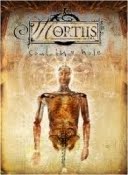
Mortiis ~ Soul In A Hole (DVD review) ... Music in a hole!


Style: industrial, heavy metal, live
Label: Earache
Year: 2005
Home: Norway

Concert location: The Ocean, London
Year Recorded: 2004
Length: 120 minutes
Bonus Features: tv commercial, electronic press kit, band interviews, photo gallery, music videos of "Parasite Girl", "Mental Maestrom (Implode)", "The Grudge", "Decadent & Desperate (Absentia)"

Members: Mortiis ~ vocals
Levi Gawron, Asmund Sveinunggard ~ guitars
Leo Troy ~ drums
n/a ~ backing vocalist/keyboards


This live concert catches Norwegian industrial band touring their release The Grudge during what they call Era 3 of the band ... most bands have eras charting out the changes in their music but Mortiis actually makes a point of including it as a part of the promotional materials as, according to the bonus interview with the frontman also named Mortiis, each era brings different types of fans. The band is famed for their frontman & only constant member, though some might say Mortiis refers to him & not a band, who always wears a goblin mask/make-up the band has gone. But, this is not the typical shock rock one has come to except from similarly heavy make-up'd bands such as Kiss, Cradle Of Filth, Slipknot, Gwar or Marilyn Manson & except for the make-up there is little musically to tie Mortiis to these groups. This is angry like Slipknot but not theatrical like the un-angry Kiss or comedic like Gwar or even shocking like Manson. Further, as the concert shows, the make-up doesn't land as the foundation of a stage set such as Alice Cooper might do. Actually, musically this point in Mortiis's musical timeline might be acquainted to some of Nine Inch Nails. Frontman Mortiis has created for The Grudge thrashy guitar based industrial, sans solos or pyrotechnics, where most of the melody is on the shoulder of the keyboards & vocals but in turn giving the songs a bit of a sober melancholy nature, at least on this recording, than what one might expect. It doesn't feel as hard as one might expect. It paints them into a unique niche in the shock rock field. In some way, it's more akin to watching the slow industrial of Gary Numan that's more hypnotic than just wild head-banging. Sadly, the compositions might be better relayed at the hands of a better singer as its just average singing going from screaming to quasi-talking & whispering while the guitars churn out nearly identical riffs that without the keyboard would have little to differentiate them. Mortiis's decrying of guitar pyrotechnics is a limiting factor that brings on additional comparisons to Cradle Of Filth that also sounds like the same song repeated over & over to unfamiliar ears. While his performance is just jumping around on stage slamming around, versus the theatrics of normal shock rock. But, as Mortiis says in the bonus interview the mask is just a habit & thus shouldn't be how one perceives the music, except people will. But, in their defense, to get the full range of musical diversity one should look at the full career of Mortiis. While this may not be the most interesting live band, with bad sound quality not helping, there is a bit of a desire to investigate them in a studio setting for comparison & to see them in a controlled musical environment where more of the nuances can be felt. Thus, at least it succeeds on some level to do something. Behind the scenes clowning around footage from the band is cut briefly in between the songs for little effect & of little necessity other then to break up the momentum of the show. For those unfamiliar with the band Mortiis started out as a bassist for black metallers Emperor & was influential in the early Viking Metal scene that brought together slashing metal guitars with synthesizer melodies based on Norwegian folksongs. At 18 years old he left Mortiis to go solo with his self-titled group debuting with an album of electronic instruments hinting more at goth than anything. While Soul In A Hole is marked as Era 3 in hindsight it became the start of Era 4 as it would show an expansion into more of a band than a solo project & would be a culmination of thundering black metal & electronic influences. Bonus footage includes uninteresting professional promo material & two interviews with frontman Mortiis that includes one that's soundbites in costume & another extensive interview that's honest, deep, less flashy & out of make-up & worth watching if you're a fan of the band. Those who find the concert uninteresting should watch the interview to get a new perspective of this angry young man. Includes music videos of four songs though they all fall into the Nine Inch Nails mode focusing on the frontman & aren't particularly flashy though "Mental Maestrom (Implode)" features an interesting Phantom of the Opera-esque juxtaposition of characters if an under-developed narrative while "Decadent & Desperate (Absentia)" features Mortiis arguing with himself in & out of make-up, which probably has never been done by a costumed shock rocker. The videos & interview give me pause to give the band better kudos than the concert.