Welcome to the meandering musical insights of Aaron Joy (me!), formerly known as the Roman Midnight Music Blog. Here you'll find nearly 750 reviews of CDs & DVDs of rock & metal in all its variations, mainstream & indie, good & bad, U.S. & foreign. A new review every Monday.

Please share these reviews & feel free to copy them to your website or link to them. No downloads to be found here.

Are you a musician with an album?? Please e-mail me (aronmatyas @ hotmail.com) your album, EPK, etc. Or, hit me up for a physical address (I'm in Portland, Maine). If you don't have an EPK, I have a soft spot for personal handwritten letters from the local musician who just plays around town. I'm a bassist & do this blog partly to share music I love & partly to help the little guy, like myself, just looking for some attention. Promo companies are always welcomed to reach out.

You can support this blog by buying my books via amazon, or your local bookseller, or seeing my website www.aaronjoyauthor.weebly.com.

September 26, 2011

Lizzy Borden ~ Master Of Disguise (album review) ... Psychodrama!


Style: shock rock, hard rock, heavy metal
Label: Metal Blade
Year: 1989
Home: Los Angeles, California

Members: Lizzy Borden ~ vocals
Joey Scott ~ drums
Elliot Soloman ~ keyboards/horn
William Kidd ~ keyboards
Mike Razzatti, David Michael Phillips, Ronnie Jude ~ guitar
Brian Perry, Mike Davis ~ bass

Additional: Timothy Taylor, Jacques Voymant, Brian Boyle, John Chudoba, Jerry Moore, Darren Solomon ~ horn
Tim Stithem ~ drums

Guest: Joey Vera ~ bass

Lizzy, the singer not the band, has shined at his creative best when constructing concept albums versus mish-mash rock song collections. Lizzy Borden, the band not the singer, debuted with some good glam metal songs & a decent if not a bit comical & gimmicky image in the tradition of Alice Cooper but soon floundered on follow-up releases with poor song-writing that did little for Lizzy's often tinny vocals. Lizzy Borden soon disbanded only to reform a decade later to record the greatly improved Deal With The Devil only to find a career climax with the follow-up Appointment With Death. Appointment With Death was a concept album that brought in lots of keyboards, raging metal or glam, a new costumed image & songs interlaced with the theme of death. But, before this unexpected high, just after breaking up the band Lizzy released a solo album named, with some self-parody, Master Of Disguise. Though, with the same drummer, Lizzy's real life brother Joey Scott Harges, & released under the name of Lizzy Borden, but now referring exclusively to the singer not the band, many may not know that this was a solo album ... much in the same way that people may not have known that there was a difference between Alice Cooper, the band, & Alice Cooper, the solo artist. But, there's definitely a musical difference. Like the later Appointment With Death, Master Of Disguise is soaring above what came before. Unlike Appointment With Death it is a true rock opera while the later is a collection of songs sharing the same theme. Songs float from one to another with sound effect & symphonic bridges much as as many bands has done in the 60's/70's or as Judas Priest would later do on their operatic concept album Nostradamus, but Lizzy pulls back the reigns on the meandering over-indulgence that hurt Nostradamus & desire for concept over songs. Beyond just the transitions between songs Master Of Disguise demonstrates the largest range of music & experimentation on any album penned by Lizzy, even including his other band Starwood in the mix, including traditional hard rockers, acoustic guitar & piano ballads, non-synthesized horn sections, orchestral bridges, & chorused vocals. The normally quasi-theatrical vocals of Lizzy, against both rock & symphonic backgrounds, finds a perfect home here where everything clicks, uplifting the weaker songs in the process. But, there really aren't any weak songs just ones that are less memorable than others or might feel more like bridges in the story than completed songs. Though, considering this against past Lizzy Borden albums one might wonder if it's not really an experiment in failure or an experiment in throwing everything one can think of into a pot & stirring like a rock'n'roll madmen. The only failure would be in not enjoying the result. Most hard rock albums fail at pulling off the concept album approach, as the format of the music often doesn't allow enough variety or at best too much pomposity. Lizzy is one of the success stories. Though, some might say differently based on low sales at the time, but a lot of that is more a reflection of the year of release & Lizzy Borden's reputation not the album itself. It's too bad that Lizzy Borden was never bigger as this album should go down in history with far more accolades than it has received. Inspired by Phantom of the Opera this is a great starting point to discover Lizzy Borden, though it's a bumpy ride as one moves to other albums. "Love Is A Crime", "Be One Of Us", "Psychodrama" & "We Got The Power" would all go on to be included in concerts as fan favorites in the decades to come.

September 22, 2011

The Kalling ~ A World To Come (album review) ... Death march!


Style: death metal, heavy metal
Label: self-released
Year: 2011
Home: Texas

Members: Bryan 'B-Ray' Ray ~ guitars/vocals

Gerald 'G-Man' Barnett ~ drums

It might be the underground production quality that, unintentionally or not, pushes the vocals far out front or maybe it's the occasional backing vocals echoing out lines in a duet manner (i.e. "Savage Rain"), or the droning guitar lines in the background underneath the verses (i.e. "In The Darkness") but the result is something that sounds like death metal as if coming out of Aleister Crowley's ghostly & lonely Loch Ness mansion ... or at least music to foretell the future by. The debut from a pair of old music industry hounds, who combined resume includes playing with bands such as Slaughter, Lizzy Borden & the Marshall Tucker Band, a follow-up Evil Kalling You was already in the works before the ink had set on the A World To Come attests to the high creative energy of this union. A World To Come, as the title belays, is a concept album of apocalyptic ideas mixed with politics, terrorism, corruption & old fashioned good & evil. It's not fancy or flashy but is definitely hypnotic. It might be the low production but it's made the album better because of it & it'll become assuredly an addictive listen. The eight minute long stomp "Death March", double the length of any other song, haunts the album early on & brings the evil to ground zero, literally, with its moaning deathly repetition that ends as fast as any actual war ... that is it goes on till you feel sick & then that's when you feel it's power hit you. If you want ghastly metal that crawls instead of twists, turns & then fizzles with flash then the Kalling has put together something you should enjoy. The one bump in the road is the instrumental "2012". Not that there's anything wrong with riffing guitars using the always cool doppler effect but, like many instrumentals, its often weaker than the arrangements of the vocal songs & doesn't particularly add anything to the whole other than a break which this album is too short to need.

September 20, 2011

Robin Gibb ~ In Concert with the Danish National Concert Orchestra (DVD review) ... I've got to get a message to you!


Style: classic rock, disco, pop rock
Label: Eagle Vision
Year: 2011
Home: England/America

Concert location: Denmark
Year Recorded: 2009
Length: 65 minutes
Bonus Features: none

Members: Robin Gibb ~ lead vocals
Nikolo Kotzev ~ guitar
Nelko Kolarov ~ keyboards
Wayne Banks ~ bass
Rune Olesen, Trevor Murrell ~ drums
Hille Bemelmans, Karima Djabelkhir, Amalia G. Nikolova, Errol Reid ~ b. vocals
David Firman ~ conductor
Danish National Concert Orchestra ~ strings/horns

With regular camera pans across the luscious green & hilly open air grounds of Denmark's Ledreborg Castle ... even with a concert tent on one end, every space filled by people on the ground on blankets & a line weaving down the hillside coming from the Castle in the distant background ... one is still magically transported to a calming place & perhaps even to a medieval fair. It's surely one of the best landscapes ever caught on a concert film. No fences, no chairs, no mosh pits, it's 1960's freedom with music floating through the air. It's a perfect venue for Robin Gibb, now striking solo after the retirement of the Bee Gees after the death of twin Maurice. It's the perfect landscape for soft pre-disco classics "I've Gotta Get A Message To You" or "I've Started A Joke". The music & landscape will sweep you away & if you're a fan of the early Bee Gees, as I am, the impact is delightful. On one hand its great to see RG keeping the Bee Gees spirit alive, but on the other hand it was his falsetto singing brother Barry who did the lead vocals, while BG's solo career is nearly a forgotten entity & the Bee Gees were never really a visually exciting band. In 1969 RG struck out on a brief solo career, now nearly forgotten as not just is RG a bit of a weak singer but it was before the Bee Gees had found international success. An 80's solo career, after the Bee Gees had faded away, was also equally forgotten. In 2003 he released another solo album, the first following the permanent retirement of the Bee Gees, & has found new success with an almost a cult attraction. Bee Gees hits & solo tracks are mixed together for this brief hour long show with horns, strings & RB's solo band. It's an all out affair, but its hard to figure out if this is a nostalgia tour or something fresh. There is something fresh about seeing the solo Bee Gee on his own keeping the flame going for an aging crowd that remembers a young Australian band & a young crowd that only know a handful of disco hits. RG puts his heart into the show & half-way through you even begin to forget that he didn't originally sing the lead vocals is basically wearing the shoes of his brother & you just enjoy his non-dance beat interpretations. The weakest tracks are the disco hits "Night Fever", "Stayin' Alive", & "You Should Be Dancing" as a backing vocalist, a girl, sings the high parts that would have been done by Barry, while RG sings in his normal lower toned voice. Having a back-up singer sound like the former lead singer just doesn't work as she's clearly trying to remain just a back-up singer as RG echoes all the lines with her. No fault of the singer who is trying her best, it just doesn't click, particularly as a high pitched female voice & a falsetto male voice are different textures. Though the audience takes to dancing with these tracks not seeming to mind. "Tragedy" takes the same approach but of the group of songs is the best as RG steps out a bit more vocally which makes one realize that he'd held back on the previous songs. This isn't a show of stage banter or a visually exciting performance outside of the landscape but it's a perfect mix of songs that one really can't find fault with & accomplishes what its aiming for - good time nostalgia, not goofy nostalgia as so many acts have found themselves doing. RG isn't trying to prove he still has the chops. Does he? He was essentially a backing singer so its hard to say. But, he's here to play music. Not fancy, not wild, just plain old fashioned enjoyable music like a band giving a private party.

September 16, 2011

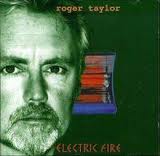
Roger Taylor ~ Electric Fire (album review) ... Working class hero for a Queen!


Style: hard rock, pop
Label: EMI
Year: 1998
Home: England

Members: Roger Taylor ~ vocals/bass/drums/keyboards/programming
Keith Airey ~ guitar
Steve Barnacle ~ bass
Mike Crossley ~ keyboards
Keith Prior ~ drums
Jonathan Perkins ~ keyboards/b. vocals


Largely forgotten except by fans Queen drummer Roger Taylor once had a band called Cross. The idea that he had a band outside of Queen is more interesting than the band itself which became so popular that by its second albums distribution stopped in America while their third & final album was released in Germany only. Ironically, its on that final Cross outing that Taylor dumped the stiff electronic drums, got a co-lyricist & actually put out a good hard rock album ... for those that can find it. RT's later solo albums, whose probably come to realize that a solo career really isn't in the cards for him as it was for his bandmates Freddie Mercury & Brian May, may still be better as an idea & for fans only, but they're a major improvement over Cross & for a variety of reasons everything Cross should have & could have been. Cross wanted to be a hard rock band but ended up with weak Queen-like musical landscapes that stretch across the musical boundaries. Fans were confused & uninterested & RT's weak lyrics aiming for Bono-esque save the world advice didn't help matters. But, as a solo artist, RT isn't advertising himself as anything but RT & thus his solo work can cross as many boundaries as it wants & fans go away interested & happy & one hopes so does he. It's often a toss-up of which of the four solo albums works the best as each climb & fall to equal measures, but the fourth & so far final Electric Fire often comes out on top for no other reason than it has some of the most memorable songs. It's more soft rock than one might expect, though the songs are slow but not necessarily ballady or preachy, & it doesn't do away with the electronica that RT seems strongly attracted to, but yet for the 1990's it doesn't seem out of place either. It might be underground avant-garde alt rock if it wasn't so sleek. It's a literal soup of rock & electronica. Think Bill Laswell for lack of a better reference. For example, RT's cover of John Lennon's "Working Class Hero" is a soupy electronic affair with guitar solos lost under clouds of echo while "Believe In Yourself" is a piano heavy rocker where the electronica is more in the stereo vocal effects. Actually, "Believe In Yourself" has a very later era Beatles feeling, right down to the sparse guitar solo, that could stand alongside side "The Inner Light" & nobody would blink. The hypnotic wash that George Harrison was aiming for in that song is the same kind of musical wash that RT is trying to create with Electric Fire. He is really treating the music as a fire that's sometimes blazing & sometimes timid. The rest of the album follows suit going back & forth with different musical elements with surprise. It's an experiment more than a cohesive album at times but ends up being a fun experiment worth checking out. As for sounding like Queen? You won't have a clue this guy played some of the best & most under-rated rock drums out there for one of the greatest bands.


September 14, 2011

The Amatory Murder ~ A Different Frequency (album review) ... Communication overload!


Style: industrial, experimental, hard rock
Label: Void Industry
Year: 2011
Home: Brooklyn, New York

Members: Christian Peppas ~ vocals/keyboards/programming

O.T. Turbold ~ lead guitar
Marios Drakos ~ rhythm guitar

Additional: Michael Spivak ~ lead guitars/b. vocals
"Lately I've been thinking, all about myself, all the thinks I could do, without everyone else ... Let me tell you from now on, it's gonna be all about me, in this world of poison" comes a synthesized talking-singing voice opening up A Different Frequency with the highlight "All About Me", before taking a page from Trent Reznor's book & turning into a scream against a background of distorted rock guitars, electronic drums & background tinkling keyboards. It's hard not to pull up Reznor's name, something other critics of the AM have also done, as the majority of the tracks don't so much follow a different frequency as they instead cull strongly from the industrial heavy metal mold Reznor created with Nine Inch Nails. With Reznor's influence so at large over the decades it's hard for any band to just coincidentally sound like him so its hard to give the AM the benefit of the doubt. So, getting the obvious comparison out of the way quickly ... yes, the AM do sound like NIN, they do a very good job imitating Reznor's common vocal effects with uncanny imitation along with the the piano note drops in the middle of thrashing guitars, plus the AM excels at working with similar narcissistic & lonely lyrical themes, such as "I communicate with my friends, still they're all alone, living in our heads ... Narcissists who pretend, with the mask we make, just to compensate" from the title track. Though, NIN is far more stark, brutal & at times uncomfortably avant-garde. If you like the originator you'll like his student. The AM may sing about the same self-fashioned narcism but doesn't come across as perversely lonely or demented, either musically or lyrically, as Reznor. If NIN was radio-friendly the result would be something on a different frequency much like the AM. Now, as for the AM on their own, outside of the obvious influences ... they do a good job of mixing together industrial beats & a landscape of sound with straight ahead power metal riffs. They also keep a lot of variety floating on the boards where one song will go from slow to fast ... or timid to fierce. Though, the band's strength is also their weakness. In 2010 an album was released by William Control called Noir, fans of that will probably enjoy the AM. It's a great album but there's basically only two songs on the album - an industrial electronic & an acoustic song - that just get repeated over & over in various permutations that don't stray too far from the original mold. By the end of the album you remember the first couple songs on the album that set the mold rolling, but you don't remember the final songs, or I should say you can't remember if the final songs are the first songs or what goes where as it all blends together. It's all pretty enjoyable but nothing makes you jump. There's a limited number of surprises & the variations are all too close for comfort. I've said in a lot of words which many critics often describe with the simpler 'lots of repetition.' This is the problem with the AM's A Different Frequency. The songs that open the record set up a mold that is followed religiously, not allowing enough songs to come out of the mix with their own personality. For example, the favorite arrangement features a slow verse with a fast chorus, or sometimes a slow chorus with a fast verse. But, after a while it all mixes together & it doesn't matter if the bridge is fast as the ear just hears fast then slow. As I hinted at earlier, that's the difference between the AM & Reznor. He'll surprise his listeners with moments where everything stops, or a song just moans like a crazy man in an asylum, while other times he'll just go full blast screeching away like cats in heat. The AM aims for a more radio friendly industrial metal that doesn't ever really go in either direction, but it would be interesting to hear more songs that are just slow or just fast or push beyond the radio-friendliness a bit ... or just don't require a fast break in the middle of a slow song. There's moments they come close. "Playdate" & "Souvenir Of Pain" average a bit more non-stop wild then the songs before it, while the second half of the album includes "She Says", "Eleanor" & "Leech" are all chilly stark Reznor-esque ballads, yet they also all have similar wild breaks in the midst of the moaning. "Leech" is particularly stark & barren with just clouded vocals & soft keyboards & it would be interesting to hear more experimentation along these lines. Even the wild bit stays with a basic rhythm & only lets the anger out in one big flash that's more instrumental than anything versus a repetitive wild break. It's one of the best tracks on the album as a result & has one of the biggest personalities. It also is a song that jumps at the listener. Sadly, where the AM does develop out this theme it's in the two minute instrumental "A Lost Signal" followed by the "Leech"-like "Chelsea" that closes the album. Though, these sound like unfinished pieces that form a coda more than developed songs. But, at least the AM are getting there. Lyrically they're on target, the lyrics being one of the strongest parts of the album, musically they're still searching. But, hey, it takes a while to find ... the perfect frequency.

September 11, 2011

Savatage ~ The Dungeons Are Calling (EP) (album review) ... The crypt keeper awaits!


Style: heavy metal, black metal, thrash, speed metal

Label: Metal Blade
Year: 1985

Home: Florida

Members: ~ Jon Oliva ~ vocals
Criss Oliva ~ guitars/b. vocals
Keith Collins ~ bass/b. vocals

Steve Wacholz ~ drums
The first two Savatage albums, Sirens & its follow-up two years later The Dungeons Are Calling, were actually recorded in the same three day marathon session. Although the music is essentially the same on the two releases the choice in what songs were given to what album makes a big difference. The both have a few weak tracks but due to its shorter length of only six songs Dungeons has a tighter focus, feels heavier because of it, is less experimental & has the added appeal of seemingly being thematically arranged around dark topics such as torture, witches, hell. It's lyrically black metal, though the songs don't fall into the typical approach as frontman/composer Jon Oliva is actually a storyteller in disguise lacing tales that feel like they come out of his own life, with the witches & dungeons only literary devices to discuss things like drug addiction, with his equally enchanting Alice Cooper-esque vocalizing. Some have called Sirens one of the earliest examples of death metal, which by association includes this album since they are both from the same session. But, really it's a combination of many of the metal forms that were floating around & a desire to just play fast, furious & venomous like no one had before. It can only be blamed on marketing & distribution that Savatage didn't become bigger than Metallica, who were going for similar sounds, or other early speed metal bands. For those familiar with the later prog-metal Savatage ... or the Savatage after the death of guitarist Criss Oliva & the introduction of composer/producer Paul O'Neill & would include guitarists Chris Caffery, Alice Cooper's Al Pitrelli & Testament's Alex Skolnick ... this is really a completely different band. Some might even call this the true Savatage as it's the Savatage as helmed by Jon Oliva with his & the vision of his guitar playing brother to guide him, sink or swim. Though, surely it would be swim as one listen will belay that Criss Oliva very well could have been the next Randy Rhoads if given the big break & a little time to polish up his playing. He's raw & wild in a way that wasn't dominating the hair metal charts at the time culling from Accept, Judas Priest & Venom. For those who are curious about early Savatage if you are familiar with the Oliva/Caffery side project Doctor Butcher or Jon Oliva's Pain this is a short leap. For those who know Savatage via its current incarnation as Trans-Siberian Orchestra, in which Oliva doesn't perform with the band, The Dungeons Are Calling has a similar sense of vocal theatrics but this is the heavy metal that TSO just poses as without ever actually pushing itself to fist-pumping levels. There's a few weaker tracks such as probably the most sex-laden song Savatage ever did "The Whip", but this is due to more to the shallow lyrical topic than anything else as it actually contains some great guitar slinging that current metal fans would fall in love with immediately ... if Savatage was still a viable entity in the current metal community. The later Special Edition release includes remastered songs & bonus tracks making it worth getting.

September 8, 2011

The Cars ~ Move Like This (album review) ... And, listen right now!


Style: new wave
Label: Hear Music
Year: 2011
Home: n/a

Members: Ric Ocasek ~ vocals/guitar/keyboards
Elliot Easton ~ guitar/b. vocals
Greg Hawkes ~ guitar/bass/keyboards/b. vocals
David Robinson ~ drums/b. vocals


If you like the Cars you'll probably like their new album. If you don't then you probably won't be converted to their quirky new wave stylings by a release which stays safe by playing the music that we know the Cars for & not trying to reinvent anything with an updated sound. That's pretty much all that needs to be said about Move Like This, their first album in over two decades years. If it's a comeback or just a brief hello it's too soon to say. It's actually a compliment to the gang that they didn't bow to peer pressure & try to become something they're not as so many resurrected bands have done with mixed unpredictable results. When a band reunites, whoever they are or whatever the style, there's a lot of expectations facing them & the Cars particularly feel this being away so long & with a sound that has long been out of style & just waiting for its comeback. It will comeback. Everything has at some point. A few bands have taken the easy way out by recording not new music but either doing a live album or re-recordings of classic songs & tacking on a couple new pieces, knowing that new material might not sell very well in a changed environment. The Yardbirds, Girlschool, Twisted Sister & Yes come to mind. Move Like This might have a mobile title, though one assumes it refers to dancing not time moving, but time has apparently not been mobile with the band as they fall right back into the mindset of their earlier days to truly be the Cars one more time & not an offshoot or band in name only with all new faces. If this had been released during their heyday it probably would have gone down as one of their best albums. As it is their fanbase has gotten older & moved on while its questionable if new fans are appearing or will come running, so who knows if anyone is still keeping score. Some new fans might criticize the quirkiness of the music, but that's more a reflection of the current trends in music than the band & how one has gotten used to not hearing a style. Yes, at times it does indeed sound as alien on the contemporary scene as if Jim Croce or Bobby Vee recorded albums today. Though, it's no more quirky than a lot of the electronica on the scene, which could make this album of interest for DJ's out there ... who will of course declare as usual, unaware of music history behind their lifetimes, that they are responsible for re-discovered the Cars, a band that nobody listened to until a DJ mixed it. Yes, honestly, it is at times a difficult album to listen to ... Ric Orcasek isn't the greatest singer & this is not music for guitar soloists, unless one turns to Men At Work's Cargo for guitar inspiration & the lyrics are sometimes too corny for their own good. But, the Cars, if you get beyond a couple hits, were never the easiest band to listen to. In many ways I'm reminded of the Devo, who also made a comeback album over the past year. Actually, this sounds a lot like the Devo comeback though might be the more difficult of the two as Devo has crafted new songs that are a lot more upbeat & radio friendly that grab you immediately while one has to sink into Move Like This before the moving starts. The Cars aren't necessarily trying to wrap you in with the first note. This is music that's all about layers. That being said ... "Too Late" & "Soon" might be two of the best ballads they've ever recorded.


September 6, 2011

Morbus Chron ~ Sleepers In The Rift (album review) ... Open the gates into this world!


Style: death metal, black metal
Label: Pulverised Records
Year: 2011
Home: Stockholm, Sweden

Members: Edde ~ lead Guitar/vocals
Robba ~ guitar/vocals
Dag - bass
Adam - drums
The debut of Swedish black metal pulverizers Morbus Chron, or as their press release calls them "the Swedish makers of audio filth", is a beastly onslaught of brutal in your face dropped tuning crude death metal that your ears will thank you for. They advertise themselves as old school death metal but for those only casually acquainted with the genre the difference between old school & new school is probably be the difference between two Aerosmith albums ... so it's almost not better to worry about where in the timeline they cull their sound from & just enjoy the result, which is in no doubt enjoyable. For those that do know the difference know that if you enjoy Metallica's Kill'Em All, Black Sabbath & yet still like growling music that sounds like demons going into battle you will absolutely love MC. There's actually a lot of enjoy here ... all made possible via somethings few new school & even quite a handful of old school bands, largely forget: 1) Black Sabbath made gloomy music not by rushing through riffs but through deep & slow growling riffs, slow is powerfully gloomy while speed is often just chaotic, 2) a break in the guitar playing to let a little air into the song can do it wonders for the arrangement & mood. A powerfully heavy & intricate rhythm section are a real key to MC's success, including bass only breaks (i.e. "Coughing In A Coffin", "Creepy Creeping Creep", "Red Hook Horror"), drums not always pounding out the double bass let alone drum only breaks or (i.e. "Hymns To A Stiff"), rhythms that may only use a few notes per bar (i.e. "Creepy Creeping Creep", "Lidless Coffin", "Ways Of Torture"), changing dynamics that often include wandering up & down along great jumping musical intervals (i.e. "Coughing In A Coffin") & even a bit of old fashioned raw nearly chaotic death metal slaying ("Red Hook Horror", "Dead Body Pile Necrophile", "Deformation Of The Dark Matter") to balance out the plodding Sabbath moments ("The Hallucinating Dead"). This is one of those bands where success doesn't necessarily lie in a particular spotlighted musician or the wonders of the guitar solo but is where everything works together, the way a band should, to create one organic beast. What's even amazing is that one doesn't even always realize that there's two guitars & two vocalists as everything so perfectly blends. This is clearly one of the most finely crafted death metal releases of the year. Every song is a killer. I wish more death metal was like this.

Heidenreich ~ A Death Gate Cycle (album review) ... The prophet's musical sacrifice!

Style: death metal, black metal, symphonic metal, experimental
Label: Napalm Records
Year: 1997
Home: Austria

Members: Peter K. ~ guitars/bass/keyboards
Thurisaz ~ vocals
Lucia ~ keyboards
Primarily the side project of Peter K. of Abigor, but including two past & future Abigor bandmates, A Death Gate Cycle is the first of two releases by the largely unsuccessful Heidenreich. This black/death metal release was panned by critics but at the same time it's endeavors to be creative have been what's kept in alive in death metal circles & amongst those looking for something different & somewhat obscure. The eight minute opening title track sets the mold for mostly what follows. It opens with a synthesizer spawned symphonic movement that is as authentically classical as any symphonic metal album can ever hope to get ... though symphonic/classical in a epic soundtrack sort of way to a movie about the Civil War or perhaps 'Lord Of The Rings'. But, this gives way suddenly to a typical death metal song of heavy Mayhem-inspired distorted riffing & growled vocals, only to just as suddenly be replaced by heavy winds blowing & another symphony but with some German voiceover a la Christopher Lee. The bridge, a highlight of the death metal part, features some creepy organ playing & a second singer trying to sound like he's in a church or more properly an opera but with a voice too weak & untrained to pull off the result. It's trying to be Satyricon with Tarja Tarunen on backing vocals ... but nobody has her voice & even she doesn't sing to death metal. While the black metal riffing sounds like all other black metal riffing, which is the problem with much black/death metal - its too imitative & lacking depth. Mayhem & Burzum were great for their originality & venomous attack but it's not music that holds up to scrutiny or imitation. Thus, we have bands like Heidenreich that try to be original but miss the mark with not disaster but boredom. Obviously this track is a mini-story but the German language fails to give its meaning to the casual listener who doesn't have any available translated lyrics while the sudden jarring from orchestra to metal to orchestra does little to create a flowing story or mood though it's trying desperately to be a musical epic. The tracks that follow tend to be in the same mold, though "Frozen Tears" has a monk-like chorus that's a bit better & a symphonic ending that's so out of a movie one can almost see the action. There's also a slow meandering guitar solo that does wonders to balance out the over-driven distorted riffing. "The Prophet's Sacrifice" & "Todeswunsch" are both instrumental orchestral pieces, though the later is a piano focused song with a Philip Glass-like repetitive rhythm that ends up sounding like a gloomy Yanni. Yanni should never sound gloomy, but at least they sound like Yanni versus just another symphonic metal band as something is obviously going right on some level. But, are these two bridges between the other songs creating a larger album length story or just symphonic forays for the sake of it? It's hard to tell, though if one removed all the death metal parts outside of the slow guitar soloing this would be an amazing genre-defying album. On some level Judas Priest would try to do similar with Nostradamus with wild songs bridged by orchestral background music, but they'd link the pieces far better & let it all flow into each other instead interruption after interruption. Closing track "Memories Of a Descending Moon" opens with a sword fight & battle scene sounds with a guitar solo of droning notes & a Christopher Lee voice over with the battle drowning out as the song continues. It's not really a song, per say as its meanders too much. But, it's the most experimental song on the album & the only one where everything comes together & flows like one believes Peter K wants it to. It's well worth checking out. Sadly, this is just another moment when I wish I had the time to go back & study my family tongue of German again.

September 5, 2011

Aron Lyrd ~ Zero (album review) ... Is this a miracle or a curse?


Style: alt rock, pop rock, experimental
Label: Eclipse Sunrise Records
Year: 2011
Home: Pennsylvania

Members: Aron Lyrd ~ all instruments
Zero, the newest release by this one man zeitgeist, pulls together an array of music styles from power pop to electronica to Paul Weller/Style Council-esque mod. There's an easy breezy feeling to the music & lyrics but underneath is a serious mood & message ... even more profound then one might expect & definitely more than most musicians who make the same claim of personal insights in their music. Since 2004 Lyrd has been nearly fully paralyzed, eventually regaining use of his arm & writing poetry to help his rehabilitation which led to making music. Music has become something special for Lyrd both as a tool for dealing with his personal/physical trauma but also for reaching out across the world to share his message of hope, in the process both rediscovering himself as a person & developing as an artist. All the music is computer generated but instead of going for the typical electronica Lyrd is more interesting in creating music as if he was in an actual band. Lyrd incorporates the sounds of guitars, bass, piano & drums for something that wouldn't sound out of place on a pop radio station coming up behind a tune by Oasis, let alone there's nothing about it to belay that Lyrd has any physical difficulties helped in part by excellent keyboard breaks, guitar solos & even backing vocals. It's very impressive what Lyrd has created & I'm almost embarrassed to mention his physical limitations considering this is so much more intricate than a lot of bands out there with fully functioning bodies. Zero includes some previously released songs, obvious from the lower production quality of the older songs, but shows how far Lyrd has developed as an artist. It's not the most cohesive sounding release Lyrd has created as it feels more like a greatest hits collection. Not just does Lyrd not fall party to typical electronica, but he aims for a range of styles. "Orange Ambition" is a piano intensive highlight ... with even a bit of cowbell. While "A Miracle Or A Curse" uses the rockabilly motif right down to the singing. The feeling of country music returns with the rock ballad "White Hot, Not Quite" & the twang of "Some Lie, While Others Cry." "I Did It My Way" is disco funk jam while "Graduates Day" could be straight out of the Oasis catalog. As far as I know Lyrd's music didn't get developed fully until after his illness, which shows how great art can come out of a potentially bad situation. & no, if you're wondering, you won't get depressed from his music. Though the lyrics might sometimes come out of depression, as the titles slightly belay, the music is anything but.

September 3, 2011

Shadowplay ~ Burnt Paradise (album review) ... Lying dead in Hollywood!


Style: heavy metal, industrial
Label: self-released
Year: 2010
Home: North Carolina

Members: J. Williams ~ vocals/guitar/bass

Additional: Kevin Watson, Kurt Dellinger ~ drums
The debut by Shadowplay, aka guitarist/singer/composer J. Williams with the help of a couple friends behind the drum kit, is an atmospheric metal outing that tends to creep along slowly with long dangling distorted notes & unhurried vocals versus fast thrashy playing. It's not exactly industrial ... or at least it doesn't wallow in electronic or keyboard tweaking & awkward rhythms, though there are some electronic drums on a handful of songs ... but if you think of the ballad part of the genre there's was definitely a lot of fumes from that part of industrial floating around the brain of Williams when he created Burnt Paradise. Both musically & lyrically the inspiration is all too obvious on a few tracks, while others tend to be more hard rock. The difference in Shadowplay's take on industrial is that that isn't a dense release with a lot of layers that marks a lot of industrial music nor does it rip everything apart to create a barren landscapes of just a few plunked notes. Though, that being said, the standout "Pure Dark" does play with basic notes crashing quickly out of nowhere, bubbling drums, guitar effects & the wonders of stereo to create perfect industrial trance-like moodiness while "Dead In Hollywood" & "Anger Burns" sound like Marilyn Manson demo tracks & the later particularly so with the vocals, but both tracks lack the intricate layered density of Manson. Lyrically Williams is casting out demons of his vision of what a burnt paradise looks like as the aforementioned song titles belay, plus: "Depraved", "Somethings In The People", "Memories Of You", "Like A Threat", "Not Alone", "Used You". Shadowplay is aiming for something in the middle ground with both heavy songs & lighter songs, even a solo acoustic piece "Grown From Our Youth" ending the album, but outside of "Pure Dark" never really going too far in either direction. One can feel that Williams is trying to bring together different musical interests to create his own style, but one also wishes that he would choose one direction & develop it more fully. The industrial outings are under-developed while the hard rock end isn't exactly catching fire. For live performances Shadowplay has expanded into a full band which undoubtedly moved the music in new directions & make up for what couldn't be done alone in the studio.

September 2, 2011

Yngwie Malmsteen with the New Japan Philharmonic ~ Concerto Suite For Electric Guitar And Orchestra In E Flat Minor Live (live) (album review) ... When you can't be pretentious enough!


Style: power metal, progressive, symphonic metal, instrumental
Label: Pony Canyon Records
Year: 2002
Home: n/a/Japan

Members: Yngwie Malmsteen ~ guitar
Taizo Takemoto ~ conductor
Nabomi Mizuno ~ harp
Yasuhito Sugiyama ~ tuba
Yasushi Watanabe, Kenji Wada, Hiroshi Arakawa ~ flute
Junta Yagi, Ryuta Suzuki ~ harpsichord/organ
Hisato Yamaguchi, Nobuko Miyashita, Yasumitsu Eto, Ryota Fujii ~ trombone
Toshihiko Mitsunobu, Takaya Hattori, Kazuhiko Ichikawa ~ trumpet
Toru Yamada, Rika Yabiku, Tatsuya Kawase, Hikaru Kojima, Takaaki Kondo ~ drums/percussion
Takaaki Tsuboi, Junji Sekikawa, Akiko Mori, Hidemi Mikai, Akira Ishikawa, Akira Ueda, Takako Ueda, Shiro Ide, Shozo Aida, Nobuyoshi Asama, Daisaku Sakuma ~ horns
Koichi Morizono, Hitoshi Makita, Tsunefumi Ishida, Yoshihito Hiroshima, Otsuo Shibata, Tatsuya Anpo, Nobuaki Nakata ~ upright bass
Izumi Yamazaki, Sayaka Miyazawa, Megumi Koike, Shozo Kaibara, Hatsumi Ishida, Ai Ishida, Momoko Inagaki, Hiroko Ichiju, Keiko Kimura, Toru Kawakami, Noriko Karaki, Maki Horiuchi, Chizuru Koyama, Toru Hirota, Kaoru Hanazaki, Masamichi Hara, Takaaki Hara, Yoko Mase, Kenji Magaki, Mari Kuwata, Makiko Matsumiya, Eiji Nakaya, Fumiko Nakagawa, Mariko Nagata, Yasushi Morisawa, Hikaru Moriyama, Yoshie Sunahata, Yuji Soda, Eiji Shinohara, Noriko Nishimoto, Reo Tada, Kumi Tanaka, Asami Tamura, Masato Takahashi, Mio Unosawa, Hiroko Yamada, Sachiko Yamaguchi, Noriko Yamamoto, Yoichi Yoshitsuru, Akiko Yano, Keiko Yamazaki, Tomoko Yoshimura, Hayato Takenaka ~ strings
Ritsuyukai Choir ~ choir


Responding to critics that said his 1998 release Concerto Suite for Electric Guitar & Orchestra in E Flat Minor Op. 1 had overdubbed guitar parts YM set out to prove them wrong by re-recording the Suite live in full view of an audience with the New Japan Philharmonic behind him on stage. There was no question after, & there never should have been before, that YM is truly the super technically advanced player he claims to be & has proven over numerous recordings. The two recordings don't differ much except for some length changes in a few songs for the stage while the concert doesn't have the cold studio sheen, or to put it another way you can feel the air hanging between the players which is lost when parts are recorded individually & pieced together later. There's also less tonal variation by YM on stage where he's not switching guitars ... which leads to what is wrong with this recording & many of YM's albums - the lack of some much needed variety in his playing. YM has a particular well-honed style featuring notes flying from his fingers at amazing speeds, but after an hour of this all done in the same tone & maybe even the same key the result is less spectacular than it should be. But, YM is the king of anti-climactic showing off. He's never understood that lightening fast playing is great but there's also a time for slower more subtle playing & what was impressive thirty years ago eventually becomes less impressive. You can't show off forever though YM has tried his hardest to do just that, seemingly oblivious that a couple generations of inspired players have come after him with maybe not the same technique but with lots more variety. Plus, these players have found emotional pockets in their music which is nearly absent from YM's playing many a time. It's very difficult to have lightening fast technique that is still emotive. Very few players, regardless of the musical genre, have managed to walk that line successfully & usually it works because they balance the fire with the water. YM just keeps feeding the flames & wondering why everyone is walking away because they're feeling too hot. YM's albums, & this one is no exception if not actually a perfect example, tend to feel like one long solo that go nowhere & have nothing to say, versus intricately crafted songs. There are a few albums, particularly the early Rising Force days, that are stellar but YM has always had this need to constantly impress instead of just relaxing. Writing for a orchestra ... might that not be just another way to impress? It might also be a way to expand his music beyond what a rock band can offer. The problem is that he doesn't use the orchestra to its full potential or to accentuate his playing nor even to seemingly challenge him. Many rock musicians have recorded with an orchestra & most use only part of what such an ensemble offers not digging into its rhythmic & tonal abilities, not using it to make music on its own versus just accentuating what the band is doing. When YM plays it's all about YM. There is no other instrument of importance on stage. He could have done this Suite with multiple keyboardist to similar, though weaker, effect. YM solos for an hour while the orchestra just plays some weak ditties in the background. There's very little interplay or letting the orchestra ever step up to bat or being more than a gimmick. Rock musicians should take a page from Yanni's Live At The Acropolis where he doesn't even play piano or do much at all on many of his own songs as he's all about letting an orchestra reinterpret his past compositions, not showing off his particular keyboard skills. YM's "Cavallino Rampante" comes close to some intertwining lines, & so does "Fugue", though the later at times sounds like the guitar is trying to work against the harmony of the two by constantly adding flourishes when the two are supposed to be playing the same thing in sync. It's shooting sparks out of the fire when it should be flowing like water. But, Suite is not all bad. There are a few good moments if one is paying attention & can get beyond the monotony. "Brothers" is about as close as we get to an emotional piece but YM is still attempting to fill the air with as many notes as possible crowding out anything else including letting the emotion have a moment to itself. "Icarus Dream Fanfare" & "Adagio" include some good guitar lines, too. The seventh song in "Prelude To April" is the one piece which pushes the limit with a change of tone, choir & even some soft nearly acoustic playing & allows the orchestra to shine for the first time. More of this, please. Though the rapid fire solo kills the piece just as it begins to take off. Change of mind. No more of that. Thankfully "Sarabande" follows & picks up the pieces, but one shouldn't have to rescue a song with another one in a similar vein. As for this album being of interest to classical fans. Probably not. Too much guitar. & there's not much particularly Romero-esque about the guitar playing. Don't introduce your classical geek cousin to rock with this particular bridge. You'll never get a second chance. Theoretically, YM could have crafted an album that bridged both classical & rock fans. Billy Joel did this with his final studio album while many classical musicians have stepped across the bridge. But, it takes more than technical playing to woo a classical audience brought up on rushing musical landscapes & operatic posing. As for the "Suite" itself ... none of the songs really rise to any great height or are profoundly interesting & are just backdrops for solos. A solo isn't a song. It might be a little two or three minute bit on an album, yes, but it's not the entire album. If YM had some solo singing or a few guests that would have moved this concert miles forward ... but when YM performs there's only room for him. It's really a shame as for someone of YM's skill he could create magic that no other guitarist could touch. Instead he's been playing the same furious lines too much in love with his skills to realize the flash has lost its flash & most people want music with more depth. Joining the "Suite" there's also the added tracks of the orchestra only "Black Star Overture", plus "Brothers", "Trilogy Suite Op. 5: The First Movement" & "Blitzkrieg" as an encore which make this the more worthwhile of the two versions of the Suite to listen to.


September 1, 2011

Stryper ~ Greatest Hits: Live In Puerto Rico (DVD review) ... Caught in the middle again!


Style: hard rock, Christian rock, heavy metal, glam
Label: MVD Visual
Year: 2006
Home: n/a

Concert location: Puerto Rico
Year Recorded: 2004
Length: 72 minutes
Bonus Features: bonus archival footage from 1989 of: "Keep The Fire Burning", "Always There For You", "Rockin' The World" & drum/bass/guitar solos

Members: Michael Sweet ~ vocals/rhythm guitar
Oz Fox ~ lead guitar/b. vocals
Tim Gaines ~ bass/b. vocals
Robert Swett ~ drums

Additional: Brent Jeffers ~ keyboards/b. vocals

Most people know Stryper as the 80's glam metal Christian rock band formed in 1983 that dressed in yellow/black, didn't cuss or throw out the devil horns & handed out Bibles & took prayer breaks during their shows. David Bowie took a prayer break during A Concert For Life: A Tribute To Freddie Mercury, wore bisexuality on his sleeve with his androgynous costumes & lived in a swirl of drug addiction ... & was an iconic superstar overnight ... while Styper has lived on the fringes of rock only briefly allowed into the mainstream, primarily because of their visual bumblebee appearance, but generally held at arms length because of their 'odd' behaviors. How interesting from a sociological perspective how 'bad' & 'unchristian' behavior make one famous while 'good' behaviors are an eighth plague. Though, existing primarily in the world of Christian rock means Stryper has never been hounded by national music trends that have killed so many bands as Christian bands tend to not have the same expectations of trend following held against them. So, perhaps, its lucky that they don't get mainstream acceptance because it's allowed a band to continue long beyond when many of their peers hit their prime, broke up, reunited & now struggle with quasi-nostalgia tours with replacement members & low album sales. The 80's Stryper was a glam metal band seemingly not that much different from most other 80's hair rock bands & even less different if one ignored the non-death lyrics & the lack of anything malicious or over-the-top metal in their live shows. Today they've largely done away with a lot of the over-the-top color-coding & mass amounts of hairspray, let alone all the stage prancing & endless guitar soloing ... the result being a much stronger & more entertaining band allowing their individual talents to shine much stronger & not requiring the assistance of arena flash. The Live In Puerto Rico DVD would be the last tour until 2009 with bassist Tim Gaines whose thick & pounding Geezer-esque basslines are a definite reason to check out the later day Stryper. He was always good but it often got lost under the flash in the earlier days. The rhythmic intensity he adds is irreplaceable & addictive to watch. Bonus tracks include a live bass solo from 1989 but, like the other bonus track solos by drummer Robert Sweet & guitarist Oz Fox, the clips are too short & is unnecessary when you have a chance to watch him for the entire show. Laying down a great rhythm is lost in a solo. Michael Sweet isn't the most distinctive singer around, as some songs show the thinness of his voice, but he's got his fans as he was asked to join as a co-lead vocalist in Boston. A couple things of trivial note include the fact that the drummer plays with his kit facing the side so the audience can see him better, let alone wearing a hat that completely falls over his head a few times. He's also wearing a yellow/black jacket ... which is actually a fan jacket from Japan's baseball team the Hanshin Tigers of Osaka where I lived for some years as the logo on the back reveals. Obviously he threw out his old 80's costumes. Sadly, the keyboardist gets no solo closeup time until two shots in the sixth song "Caught In The Middle". A common plague to rock keyboardists whose sounds and face are ignored but yet contributions deserving more. Watching this concert I'm reminded of so many hair metal bands that once they did away with the onstage prancing, big hair & gimmicks on some level they seemed to become more interesting musicians, let alone a lot heavier in their musical styles. It's like the energy got refocused. Though, I'm the first to say that I love the dress-up & it was what got me interested in rock as a boy. Also, when you can't hide behind a wild costume or eye-make it changes how one acts on stage. One has to, seemingly, actually perform. The result may not be as exciting at times & it does tend to show musical weaknesses but a great band is a great band no matter what they do onstage. In 2004 and still today Stryper are more of a heavy metal band than 80's hair/glam rockers. It's almost a shame they've become known as a Christian band as that stigma will alienate many listeners. Stryper's 2009 album Murder By Pride is a grunge/heavy metal inspired highlight of their career that isn't that much stereotypical Christian lyrically or at least no more noticeable than when Metallica sings religious songs. Bonus footage includes clips from a 1989 show from the In God We Trust Tour with the band in a prime year for hair metal & their own career, though they've changed so much between 1989 and 2004 it's hard to see the same band in the two parts but it is. Sadly, they sound too much like their peers of the time while their yellow/black attire & black pants end up now being a bit reminiscent of Spinal Tap. Glam rock has dated itself well. The quality is a bit poor & poor lighting doesn't help. Essentially, the bonus clips come down to being, for non-fans, an interesting comparison of how a band changes over the years ... from pretty boys to hard rockin' adults. And, it shows how much they've improved with age.